


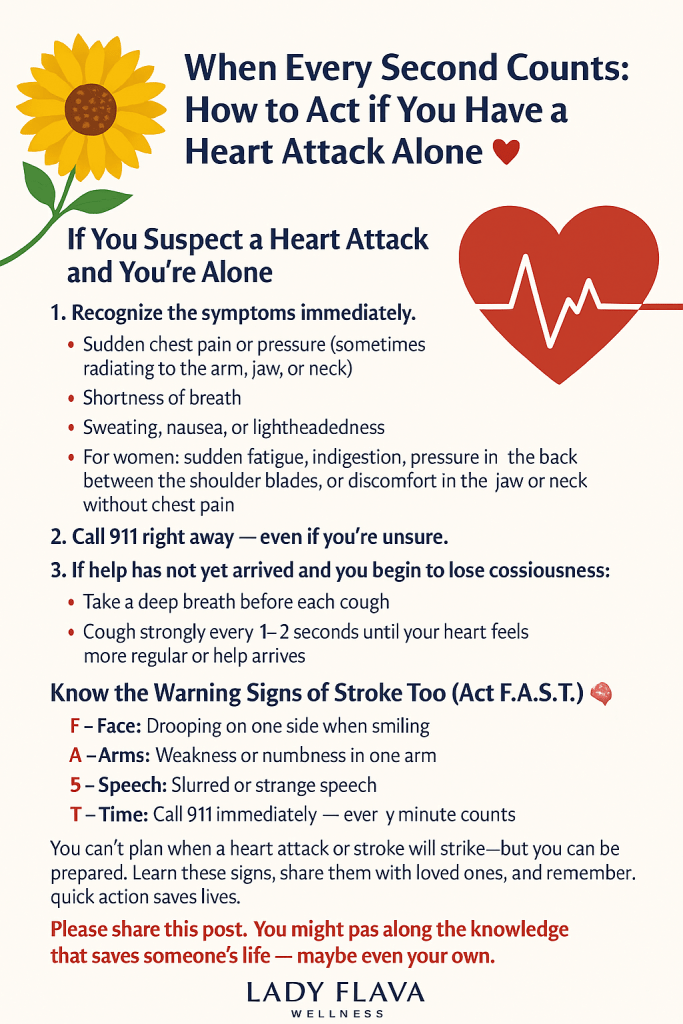
When Every Second Counts: How to Act if You Have a Heart Attack Alone ❤️
We often learn CPR to help others — but what if you are the one having a heart attack and you’re alone? Knowing what to do in those first few seconds could save your life.
If You Suspect a Heart Attack and You’re Alone
Recognize the symptoms immediately. Sudden chest pain or pressure (sometimes radiating to the arm, jaw, or neck). Shortness of breath. Sweating, nausea, or lightheadedness. For women: symptoms may be different — sudden fatigue, indigestion, pressure in the back between the shoulder blades, or discomfort in the jaw or neck without chest pain. Call 911 right away — even if you’re unsure. Paramedics can start treatment before you arrive at the hospital. If help has not yet arrived and you begin to lose consciousness: Take a deep breath before each cough. Cough strongly every 1–2 seconds until your heart feels more regular or help arrives. Deep breaths bring oxygen into the lungs, while the force of coughing can help keep blood circulating to vital organs, potentially keeping you conscious long enough to get help.
Know the Warning Signs of Stroke Too (Act F.A.S.T.) 🧠
Heart attacks and strokes are medical emergencies that can happen without warning. Knowing stroke signs is just as important:
F – Face: Drooping on one side when smiling.
A – Arms: Weakness or numbness in one arm.
S – Speech: Slurred or strange speech.
T – Time: Call 911 immediately — every minute counts.
Final Thoughts
You can’t plan when a heart attack or stroke will strike — but you can be prepared. Learn these signs, share them with loved ones, and remember: quick action saves lives.
📢 Please share this post. You might pass along the knowledge that saves someone’s life — maybe even your own.
 Lady Flava News