

Health & Wellness: Be Careful of Social Media Health Tips
Social media can be entertaining, educational, and helpful. It can introduce us to health conditions we have never heard of, give us questions to ask our doctors, and remind us that we are not alone.
But social media is not a medical provider.
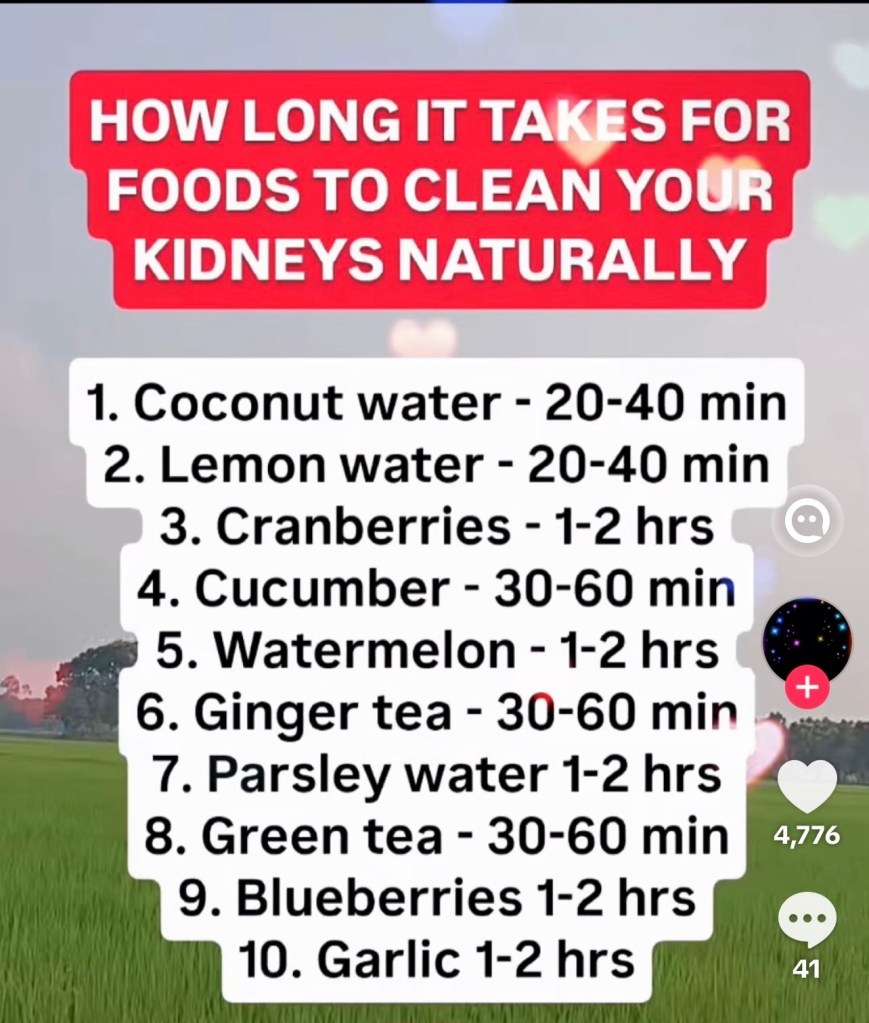
While scrolling, I recently saw a video claiming that certain foods could “clean your kidneys naturally.” It listed coconut water, lemon water, cranberries, cucumber, watermelon, ginger tea, parsley water, green tea, blueberries, and garlic.
That part did not immediately sound unreasonable. Most of those are healthy foods.
It was the next part that made me stop.
The video gave exact times for how quickly each food would supposedly clean the kidneys—some within 20 to 40 minutes and others within one or two hours.
Girl, what?
Healthy kidneys already work continuously to filter the blood, remove waste and extra water, and help balance minerals in the body. A cucumber does not clock in for a 30-minute kidney-cleaning shift.
The foods on that list may have nutritional benefits, but that does not mean they rapidly detox or clean the kidneys.
That post was a good reminder: information can contain a little truth and still create a completely false conclusion.
A Large Following Does Not Equal Medical Expertise
A video may have thousands of likes, comments, and shares. That only tells us the content attracted attention.
It does not prove the information is accurate.
A confident voice, a white coat, dramatic music, professional graphics, or the words “doctor approved” should not automatically earn our trust.
Before accepting health information, find out:
- Who created it?
- What are their qualifications?
- Are they speaking within their area of expertise?
- Are they selling the product they recommend?
- Did they provide evidence?
- When was the information written or reviewed?
- Can the claim be confirmed through other reliable sources?
The National Center for Complementary and Integrative Health recommends asking who created the content, what it promises, when it was reviewed, and whether it is based on scientific research. (nccih.nih.gov)
Watch for Red-Flag Language
Slow down when you see claims using words such as:
- Detox
- Cleanse
- Flush
- Miracle
- Cure
- Guaranteed
- Instant
- Secret
- Doctors don’t want you to know
- Works for everyone
- Results within minutes
The FDA warns consumers to be suspicious of promises such as “miracle cure” and “guaranteed results.” A product promoted as treating a medical condition without scientific proof may be health fraud. (fda.gov, fda.gov)
Also remember that natural does not automatically mean safe.
Foods, herbs, teas, vitamins, and supplements can affect medications, blood pressure, blood sugar, kidney function, bleeding risk, and preparation for surgery.
Something that may be healthy for one person could be inappropriate for someone with kidney disease, diabetes, heart disease, allergies, or another medical condition.
How Should We Research a Health Claim?
1. Pause Before Trying or Sharing It
Take a screenshot or save the post, but do not immediately change your diet, stop medication, begin a supplement, or send the video to everyone you know.
A viral post is a starting point for a question—not the final answer.
2. Identify the Original Source
Look beyond the person reposting the information.
Who originally made the claim?
Is there a doctor, registered dietitian, pharmacist, licensed therapist, university, hospital, government health agency, or professional medical organization attached to it?
Credentials matter, but they are not enough by themselves. A qualified person should still provide balanced information supported by evidence.
3. Search the Claim—Not Just the Product
Instead of searching:
“Benefits of parsley water”
try searching:
“Does parsley water clean the kidneys?”
Then add words such as:
- Evidence
- Research
- Risks
- Side effects
- Drug interactions
- Myth
- Medical guidelines
This helps prevent us from searching only for information that agrees with what we already want to believe.
4. Use Reliable Health Sources
Good starting places include:
- National Institutes of Health
- MedlinePlus
- Centers for Disease Control and Prevention
- U.S. Food and Drug Administration
- National Institute of Diabetes and Digestive and Kidney Diseases
- Major hospital and university medical systems
- Professional organizations related to the condition
Websites ending in .gov are often useful, but the web address alone should not be your only test. Look for named authors, medical reviewers, references, publication dates, and balanced explanations.
Reliable information should explain both possible benefits and risks. It should not depend only on testimonials or pressure you to buy something.
MedlinePlus advises readers to check who runs and funds a website, whether experts review the information, and whether the content presents balanced facts supported by research. (medlineplus.gov)
5. Look for the Evidence
Does the post link to an actual study?
If it does, ask:
- Was the research done on humans?
- How many people participated?
- Was it one small study or supported by several studies?
- Did the research actually reach the conclusion stated in the video?
- Was the study published in a reputable medical journal?
- Who paid for the research?
A creator saying, “Studies show,” without naming or linking those studies is not evidence.
Trustworthy health information should tell you what evidence supports the claim and clearly separate research from opinion. (nccih.nih.gov)
6. Compare More Than One Reliable Source
Do not stop after finding one article that agrees with the video.
Check two or three dependable sources. If respected medical organizations disagree, that is a sign that the answer may be uncertain, individualized, or still being studied.
Health information is rarely one-size-fits-all.
7. Ask How It Applies to Your Body
Even accurate general information may not be safe for you.
Ask:
- Could this interact with my medications?
- Is it safe with my medical conditions?
- Could it affect my kidneys, liver, blood pressure, or blood sugar?
- Could it interfere with surgery or another procedure?
- Is the recommended amount reasonable?
- Do I need laboratory testing first?
A pharmacist can be an excellent resource for questions about medication, herbs, teas, vitamins, and supplements.
8. Bring the Information to Your Medical Team
You do not have to feel embarrassed for asking about something you saw online.
Say:
“I saw this health claim on social media. Can you help me understand whether it is accurate and safe for me?”
Bring the screenshot, link, product label, ingredient list, or video. That allows your medical team to evaluate the exact information instead of guessing what you saw.
Social Media Can Start the Conversation
Not every social media health post is wrong. Some licensed professionals share useful information and explain complicated medical topics very well.
The problem begins when we treat a short video as a diagnosis, prescription, or personalized treatment plan.
Social media can help us become curious.
It can help us find language for symptoms.
It can encourage us to seek care.
But it should not replace qualified medical guidance, reliable research, or our own health history.
Before you try it, buy it, stop taking something, or share it with someone you love:
Pause. Check the source. Look for evidence. Compare reliable information. Ask how it applies to you. Then speak with your medical team.
Do not let a confident stranger with dramatic music and a list of “cleaning times” make decisions for your body.
Your health deserves more research than one swipe.
Lady Flava Wellness 🌻
#HealthAndWellness #SocialMediaHealthTips #HealthMisinformation #ResearchBeforeYouShare #KnowTheSource #AskYourDoctor #AskYourPharmacist #HealthLiteracy #PatientAdvocacy #WellnessWisdom #LadyFlava #FlavaInHerTower

