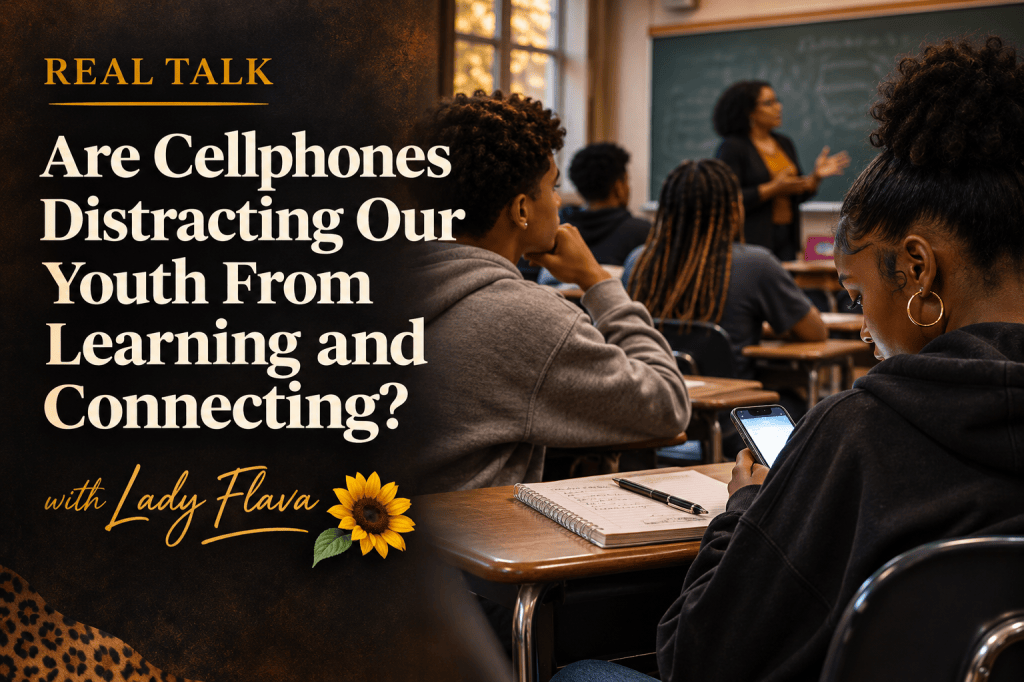
Real Talk | Are Cellphones Distracting Our Youth From Learning and Connecting?
I talk a lot about how loud this world is. But when I think about the world our young people have to maneuver through? Their world is overwhelmingly loud.
They can pick up one phone and see a funny video, a news story, somebody’s opinion presented as fact, and a nasty comment aimed directly at them. All before the first bell. How do they figure out what’s real, what brings value to their lives, and what they can let pass?
And with all that going on, they still have a real-life responsibility. They have to show up, get an education, and figure out what they want to do with it. Right?
What’s happening in the classroom?
Think about the teacher trying to get through a lesson. Some students are ready to learn. Some are struggling to engage, and the teacher is trying to find a way to reach them. Then a phone lights up, somebody laughs at something on a screen, and now half the room wants to know what they missed.
In a 2024 Pew Research Center survey, 72% of U.S. public high school teachers called cellphone distraction a major problem in their classrooms. In federal survey results released in 2025, 53% of public school leaders said cellphone use hurt academic performance, and 77% of public schools reported prohibiting students from using phones during class.
And then there’s the question of whose work it is. Looking up a word for a class assignment can help you understand what you’re reading. Looking up an answer in the middle of a test is cheating. If AI writes your whole report and you can’t explain it when the teacher asks you about it, what did you learn?
What happens between the bells?
The phones are in the hallways, on the bus, and in their hands on the way home. Sometimes it’s a joke between friends or a text to let somebody know they got home safely. A phone can also give a student access to tools they need to participate in class. Those things matter.
But what happens when somebody records a classmate at their most embarrassing moment and sends it around? What happens when a kid checks their phone at bedtime and sees that people are still talking about them? And when an argument in a group chat turns into threats of a fight or gun violence, do those students know which adult they can tell and trust to take it seriously?
Bullying can be one factor that increases a young person’s risk of suicide. That’s serious, and it’s one reason I want adults to listen when a child says what’s happening online is hurting them. Imagine having to walk into school the next morning and sit beside the same people who spent the night tearing you down.
My heart goes out to these kids. In my day, we had our own mess. But when I got home, I could get a break from what happened at school. Today, it can follow a child right into their bedroom.
So what’s the resolve?
I’d start with phones put away during instruction and tests, with clear exceptions for accessibility, health needs, and teacher-directed activities. Families should know how to reach their children through the school. And administrators need to back up their teachers so every classroom isn’t having the same argument from scratch.
The research on lockable phone pouches gives us different results. A November 2026 study led by Harvard researchers found modest gains in academic growth. A separate national study found average effects on test scores close to zero. I’d want schools to pay attention to what happens in their own classrooms, including how much time teachers spend policing phones and whether students feel comfortable asking an adult for help.
And the adults have some work to do at home, too. Sit down with a young person and look at a post together. Who put it out there? Where did they get their information? What would you do if that video was about somebody you knew? Give kids a chance to talk through those questions before they’re dealing with them alone.
Listen, I’m 66 years old, and I’m writing this on my cellphone right now. I’ll see a post, wonder if it’s true, and go straight to Google to check it. Sometimes I look up and realize I’ve spent more time scrolling than I ever meant to. So yes, I believe cellphones play a role in what’s happening at school. And I have some grace for young people trying to figure out how to manage something that still gets the best of grown folks. 😉
What are you seeing? If you’re a student, parent, teacher, or school administrator, when do phones help and when do they get in the way? How are they affecting the way students treat each other and relate to the adults at school? What would you keep, what would you change, and what habits do you want young people to carry with them after graduation?
Real Talk with Lady Flava 🌻