

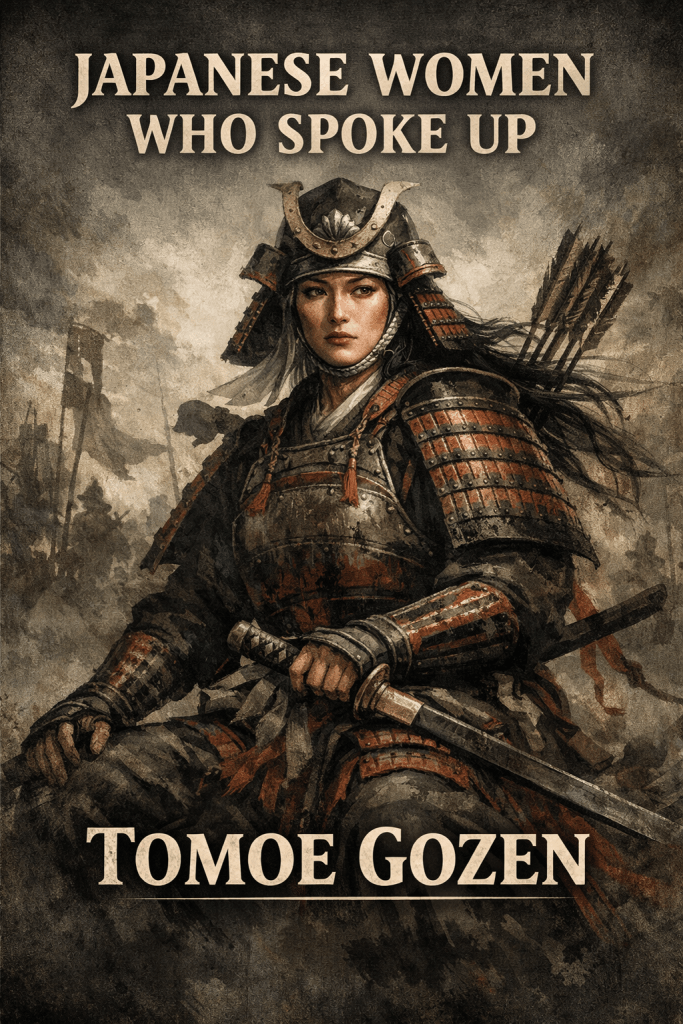
Japanese Women Who Spoke Up
Tomoe Gozen spoke up without raising her voice.
She lived in the late 12th century, during the Genpei War — a time when women were expected to stay behind the scenes, silent and obedient, while men decided the fate of the world. Tomoe didn’t fit that mold. She shattered it.
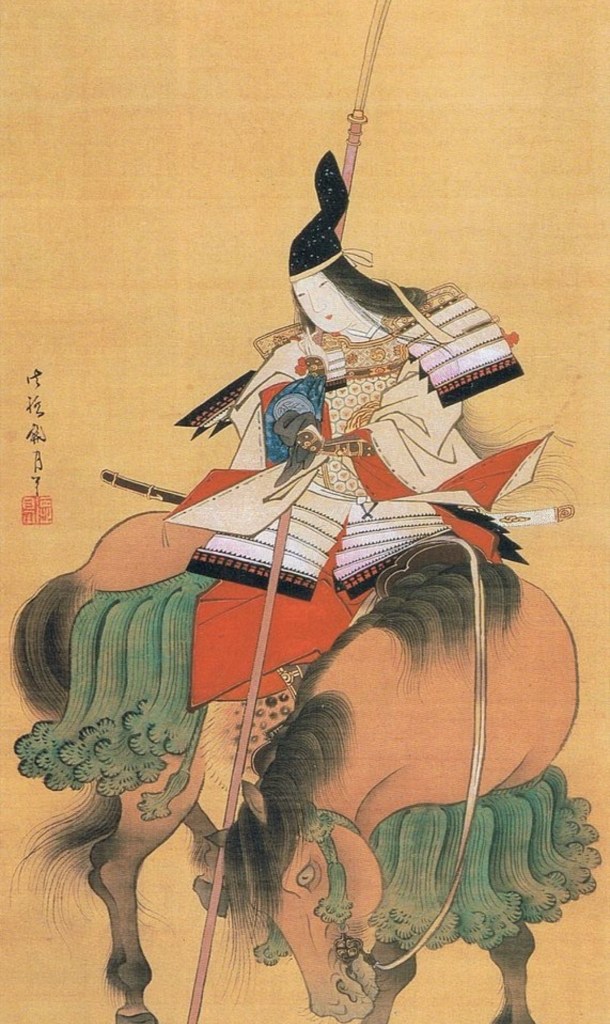
She rode into battle wearing full armor.
She was skilled with the bow.
She fought with a sword like it belonged to her — because it did.
Historical records describe her as fearless, strong, and battle-ready. And interestingly, they also made sure to describe her beauty — as if strength alone wasn’t enough to explain her presence. Even then, the world struggled with the idea of a woman who could fight and lead without apology.
Tomoe didn’t give speeches.
She didn’t write essays.
She didn’t ask to be included.
Her voice was action.
In a culture that tried to keep women contained, Tomoe Gozen stood visibly in her truth. She proved that speaking up doesn’t always mean saying something out loud. Sometimes it means living so boldly that history has no choice but to notice — even if it doesn’t quite know what to do with you.
That’s why she belongs here.
Because courage doesn’t always shout.
Sometimes it rides into battle, refuses to shrink, and changes the story just by showing up.
Tomoe Gozen reminds us: women have always been warriors.
The world just wasn’t always ready to name them as such.
 Lady Flava News