

Real Talk Thursday
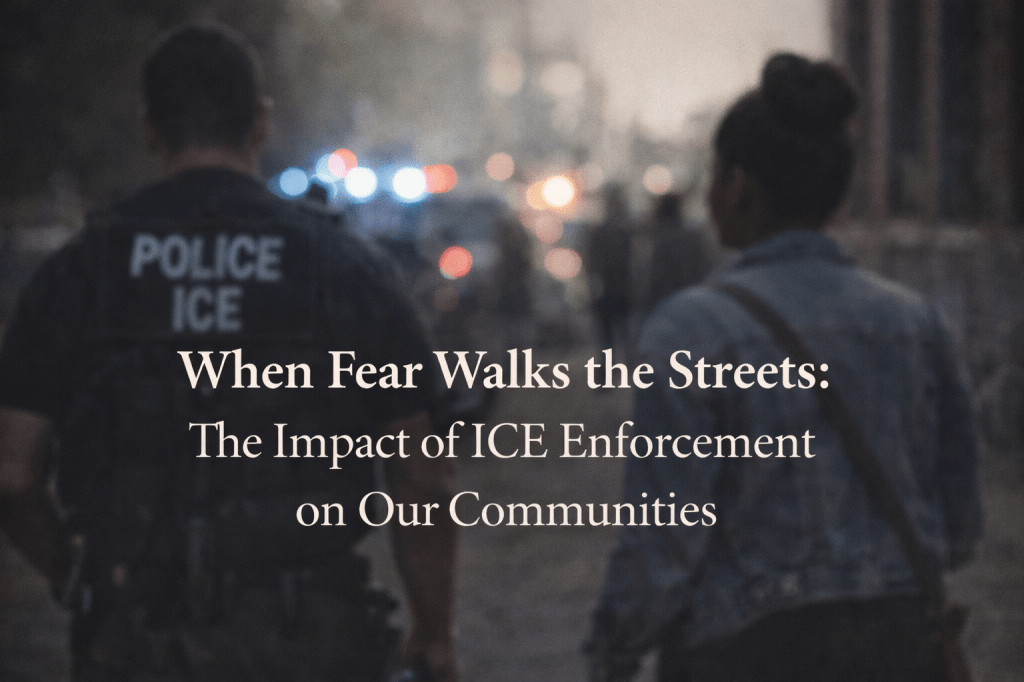
When Fear Walks the Streets: The Impact of ICE Enforcement on Our Communities
Right now, many of our neighbors are living with a kind of quiet fear that changes everyday life.
This fear isn’t just political noise — it’s showing up in schools, hospitals, workplaces, and even on sidewalks.
For people of color and immigrant families, seeing increased enforcement by U.S. Immigration and Customs Enforcement (ICE) means navigating not only their daily routines but the weight of uncertainty and threat that goes with it.
A Climate of Fear and Its Effects
In places like Minnesota and across the country, recent immigration enforcement actions have sparked deep unease — especially after violent encounters involving federal agents and civilians. These events have drawn widespread attention, protests, and debate.
That unease isn’t abstract. It shows up in very real ways:
Fear around schools and hospitals has been reported, with educators and caregivers speaking out against what they call a climate of terror within learning environments and medical settings because of aggressive enforcement.
Healthcare avoidance is a documented trend: individuals delay or skip appointments out of fear of encountering ICE, even when they or their children have urgent needs.
Families change their routines, staying home more, avoiding social spaces like churches and community centers, and altering work or school attendance to reduce perceived risk.
Children and mixed-status families carry this stress, which can affect emotional well-being and physical health among groups who feel watched or threatened.
When fear becomes part of daily life, it influences not just decisions — it influences how people feel safe in their own neighborhoods.
Why This Matters Beyond Immigration Status
The fear of enforcement doesn’t just affect undocumented immigrants. Many people of color, mixed-status families, and even U.S. citizens find themselves anxious about:
Public spaces Hospitals and clinics
Schools and child care
Everyday errands
It creates a ripple effect where communities don’t feel free to move, learn, or heal.
Schools report lower attendance, caregivers delay preventive visits, and families sometimes skip critical care — not because they don’t want it, but because fear is telling them it’s unsafe.
This is a public health issue as much as a political one.
Faith, Community, and Resilience
In response to these fears, neighborhoods around the country are finding ways to support each other.
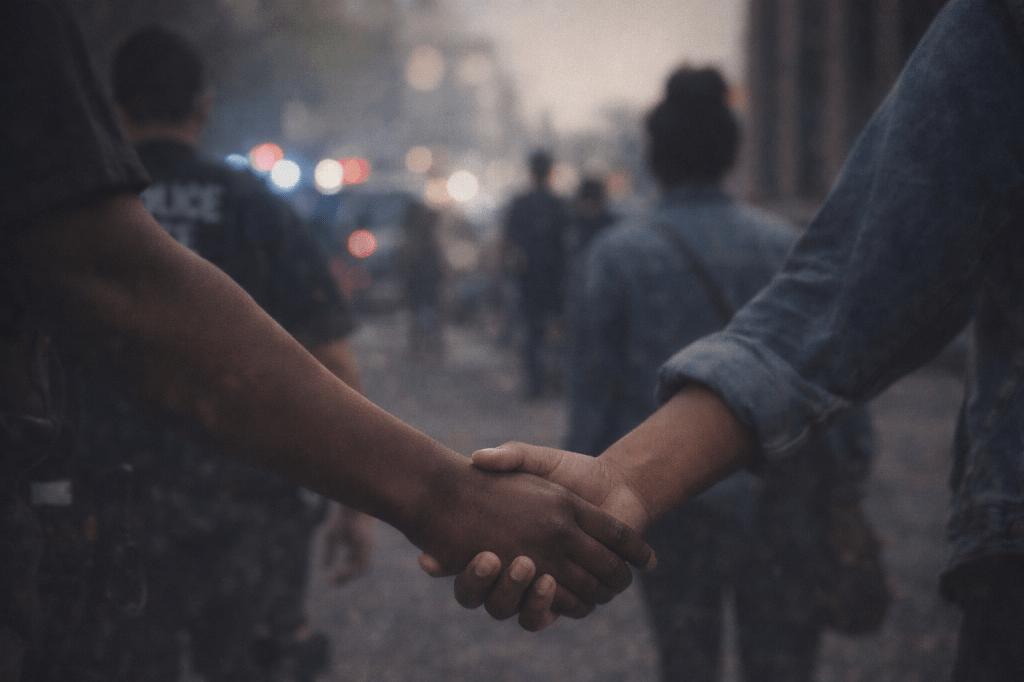
In Minneapolis and beyond, mutual-aid networks and community hubs are emerging to provide resources, information, and a sense of safety — not through isolation, but through connectedness.
People are learning their rights, sharing information, and walking alongside each other so that fear doesn’t become paralyzing.
What Real Talk Looks Like
This isn’t about taking sides in a political debate. It’s about acknowledging what is already happening in real life:
Fear can change how people move in the world.
Fear can stop someone from seeing a doctor.
Fear can interrupt learning at school.
Fear can make walking down the street feel unsafe.
And when that happens, communities suffer — emotionally, socially, and physically.
Closing Thought
Real talk means facing uncomfortable truths with compassion and clarity.
When our neighbors feel afraid of everyday life — just for walking, working, loving — it affects all of us.
Not because we all live the same experience, but because none of us are whole when part of our community feels unsafe.
Listening matters. Presence matters.
Acknowledging fear without fueling it — that matters too.
Let’s walk that with empathy. 🌻
 Lady Flava News