🌿 Finding My Way Back to Me: A Journey Through Ikigai and Wabi Sabi
By Susan “Lady Flava” Koshi
There are times when I wish I had an elder still with me—someone to sit beside, sip tea with, and ask deep questions about life, purpose, and beauty. I imagine them telling stories with soft hands and wise eyes, guiding me gently through the fog. But I no longer have that person. So today, I turn inward—and to these two beautiful Japanese philosophies that feel like soul whispers: Ikigai and Wabi Sabi.
✨ Ikigai — A Reason for Being
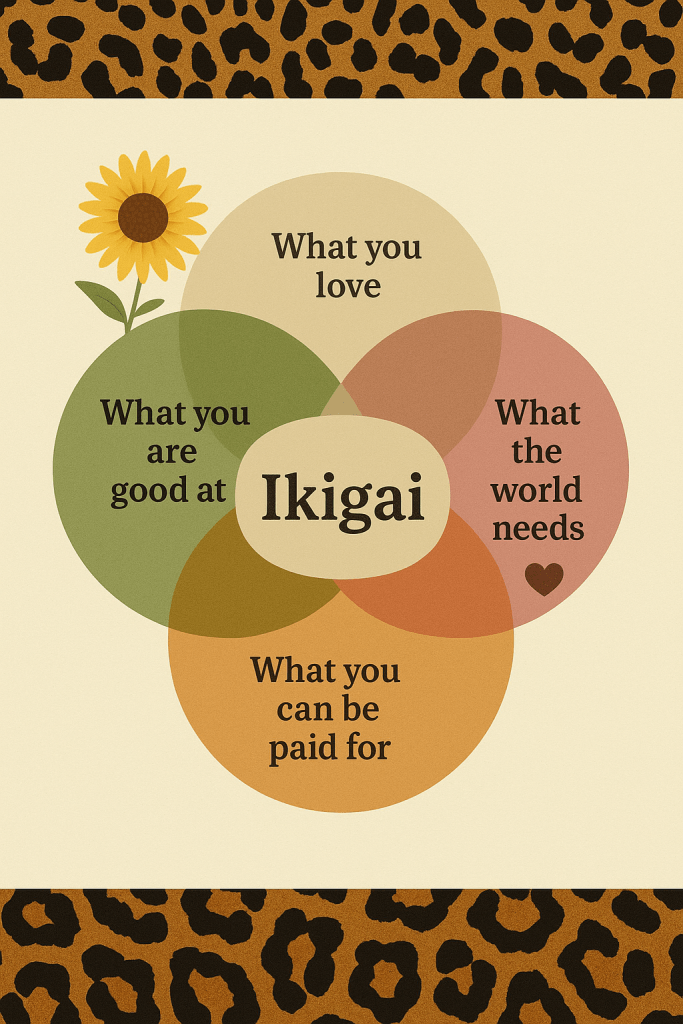
According to Japanese tradition, ikigai is the reason you wake up in the morning. It lives in the sweet intersection of what you love, what you’re good at, what the world needs, and what you can be paid for. Looking at that chart, I realize I’ve been circling my ikigai for years—sometimes close enough to touch it, other times watching it fade behind survival.
But still, I have always shown up—with heart, with hope, with purpose.
🌻 What I love:
I love writing, creating, nurturing. I love conversations that matter. I love helping people feel seen.
🐆 What I’m good at:
I’m good at listening between the lines, catching the unspoken. I’m a bridge, a healer of hearts, a creative problem-solver, and a soulful communicator.
🌍 What the world needs:
The world needs more kindness, more understanding of aging, of pain, of care—especially for those often unseen. It needs people who hold space and bring calm to the chaos.
💵 What I can be paid for:
I’ve earned through radio, artist support, patient advocacy, elder care, writing, consulting. And now I’m learning: I can be paid for just being me—Lady Flava with her heart in her hand.
My ikigai is no longer something to chase. It’s something to honor.
🍵 Wabi Sabi — The Beauty of Imperfection
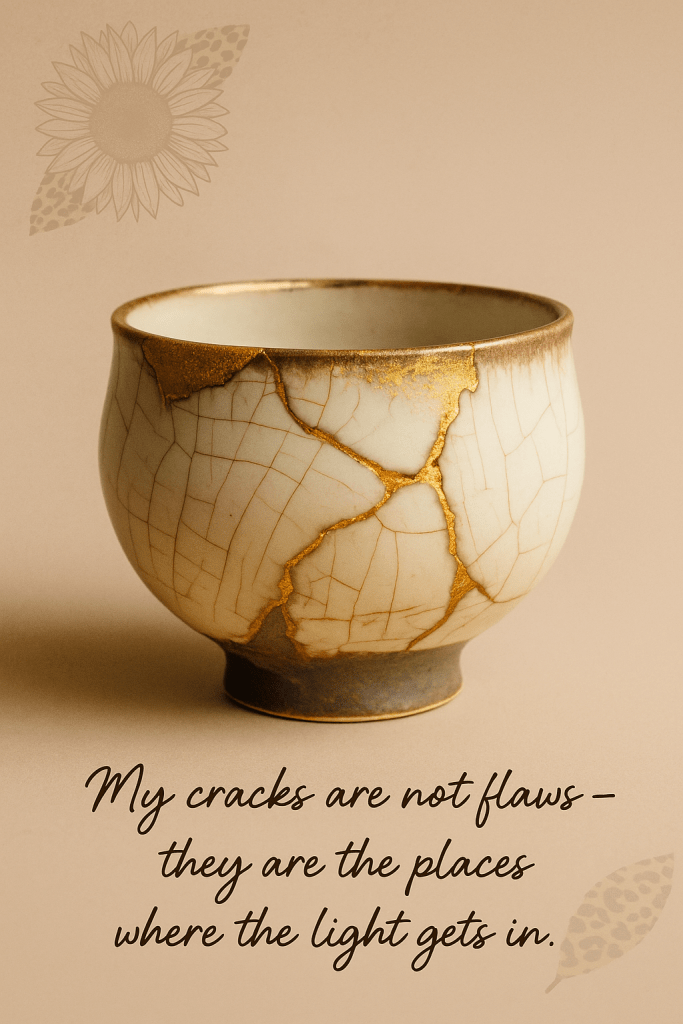
And then there is wabi sabi—a way of seeing beauty in the cracks, the worn edges, the faded moments. Like the Japanese pottery repaired with gold, I too have been cracked. Not broken, but transformed.
I’ve survived heartache, illness, workplace injustice, loss—and still, I rise each day with a soft heart. My white hair is my crown. My eclectic space is my sanctuary. My pain is my wisdom.
I used to think I had to have it all together. But wabi sabi tells me I am enough—right now, as I am.
🕊️ A Letter to the Elders I Wish I Could Talk To
If I could speak to my grandmother or another elder today, I’d ask:
“Did you find your ikigai, even in quiet ways? Did you feel beautiful when life made you feel cracked?”
And maybe, they’d hold my hand and say:
“Child, the fact that you’re asking means you’re already walking the path. Let life soften you, not harden you. Let your cracks shine like gold.”
🌀 Coming Home to Myself
I’ve lived many lives under the name Lady Flava—arts supporter, book reviewer, patient advocate, spiritual empath. And now, in this new season, I realize I’ve been living my ikigai all along… I just didn’t know its name.
And in the places I’ve felt broken, I now see gold.
🌻 Affirmation:
“I am a beautiful mosaic of love, purpose, and imperfection. And that is enough.”
Susan K aka Lady Flava
Embracing My Japanese Heritage

🕯 In Honor of My Grandmothers
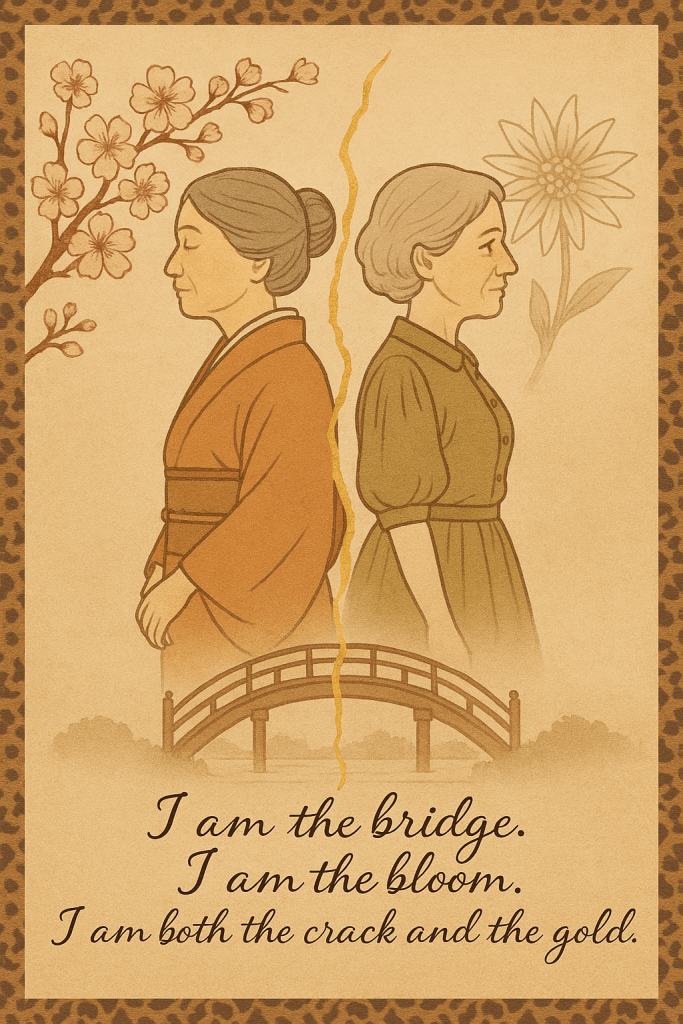
As I reflect on Ikigai and Wabi Sabi, I carry with me the spirits of two grandmothers who shaped me in very different ways.
My grandmother Matsu, my father’s mother, lived with us for much of my life. I remember her presence in our home—quiet, strong, woven into our daily life like the scent of warm rice or the softness of tatami mats. She passed away when I was sixteen, in our family’s home. Though she spoke little English and I spoke little Japanese, love always found a way. Her gentleness and grace are etched into my memory, and I feel her guiding me still.
My maternal grandmother, my mother’s mother, I met only once—when I was twelve. My two older brothers never had that chance. She could not accept us as her grandchildren because our father was Japanese. That rejection left an invisible scar, one that I’ve quietly carried all my life.
In honoring them both, I acknowledge the wholeness of my story: the parts wrapped in warmth, and the parts touched by pain. Wabi Sabi teaches me that even broken roots can grow strong trees. And Ikigai reminds me that this journey—my journey—has meaning.
I am the bridge.
I am the bloom.
I am both the crack and the gold.