Thursday Health & Wellness
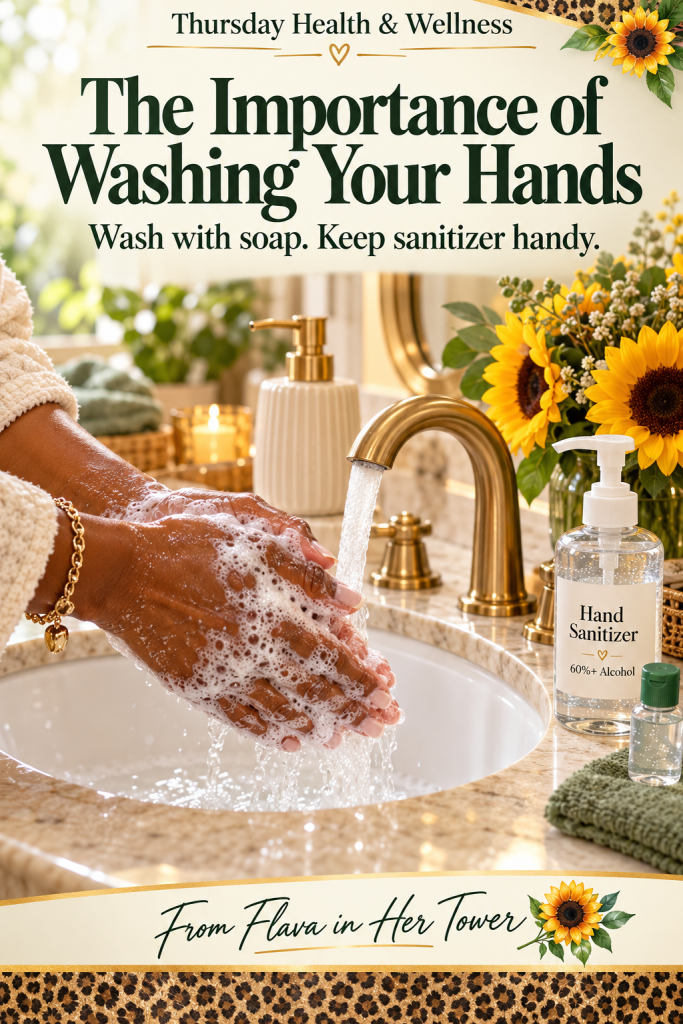
The Importance of Washing Your Hands
Recently, some staff and patients have come down with COVID, and it got me thinking.
Remember when we were constantly reminded to wash our hands and keep hand sanitizer nearby?
I hope we haven’t become lax about something that should remain part of our everyday lives.
Handwashing didn’t stop being important when the reminders became less frequent.
Working in the medical field, I see how much attention goes into cleaning examination rooms, equipment, and shared spaces. Cleaning staff put effort into the surfaces people touch throughout the day.
But we have a part to play, too.
Think about your own daily routine. Your phone. Your keyboard. Door handles. Shopping carts. Bathroom trips. Preparing lunch. Taking out the trash. Giving those sweet pets some love.
Our hands stay busy, don’t they? 🤣
And without thinking, we touch our eyes, nose, mouth, and food.
This isn’t about being afraid of everything we touch. It’s about remembering a simple habit that helps protect us and the people around us.
Why does it matter?
According to the CDC, handwashing can prevent about 30% of diarrhea-related illnesses and about 20% of respiratory infections, such as colds. Those are meaningful benefits from something as basic as soap, water, and a little time.
For my seasoned sisters and brothers, and those caring for someone with a weakened immune system, these everyday habits deserve our attention.
Let’s wash like we mean it.
A quick splash and a wipe on your pants is not the full process. 😉
- Wet your hands with clean, running water—warm or cold.
- Apply soap and lather.
- Scrub for at least 20 seconds, including the backs of your hands, between your fingers, and under your nails.
- Rinse thoroughly.
- Dry with a clean towel or an air dryer.
Twenty seconds may feel long when you’re rushing. Give yourself those seconds anyway.
When should we remember to wash?
- Before, during, and after preparing food, and before eating.
- After using the bathroom or changing diapers.
- After blowing your nose, coughing, or sneezing.
- After touching animals, pet food, or animal waste.
- After handling garbage.
- Before and after caring for someone who is sick.
- Before and after treating a cut or wound.
And what about hand sanitizer?
I appreciate having an option when a sink isn’t available. Keep a bottle where it’s convenient, and choose one containing at least 60% alcohol.
Use the amount directed on the label, cover every surface of your hands, and rub until dry. Don’t wipe it off before it finishes drying.
But sanitizer has limits. It doesn’t remove every kind of germ or chemical, and it works less well on visibly dirty or greasy hands. Soap and water are especially important for germs such as norovirus, which sanitizer does not handle well.
One more thing about COVID and other respiratory illnesses.
Clean hands are one part of prevention. Cleaner indoor air, staying home when sick, recommended vaccinations, and a well-fitting mask when additional protection is needed also matter. We don’t have to wait for a mask requirement to choose that extra protection. Healthcare facilities have their own guidance to follow.
As I prepare for my own surgery, these everyday choices feel especially personal. I’m paying attention to what I can do to care for myself.
We cannot control every exposure or prevent every illness. But we can keep practicing the basics.
So here is my gentle reminder—with a little Flava behind it:
Wash your hands. Take the time. Make it a habit.
What helps you remember to clean your hands throughout the day?
Lady Flava Wellness 🌻
From Flava in Her Tower 🌻