

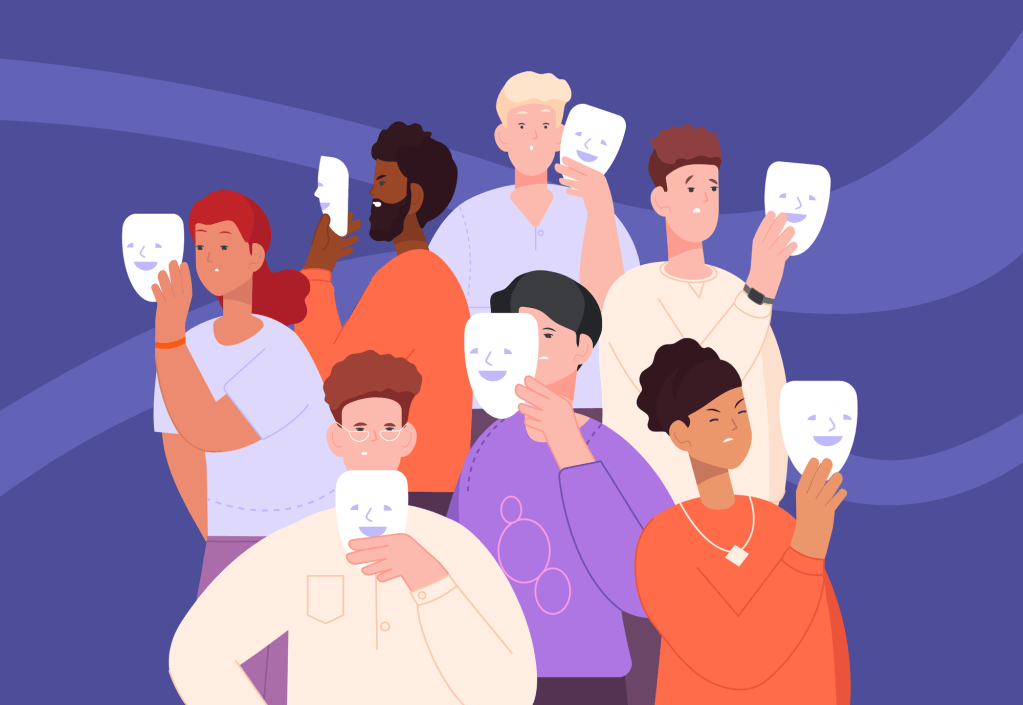
Masking: The What, the Why… and My Personal Journey
While living in Las Vegas, I encountered someone who was on the Autism Spectrum. It turned into a hurtful and emotionally challenging experience—one that left me confused and searching for answers. There was an unusual disconnect between us, one unlike anything I had experienced before. That disconnect led me to join not one, but two therapy groups. As people began to share their stories, I was stunned by how closely they mirrored my own. That was the beginning of my journey into researching and understanding Autism Spectrum Life.
As I continued to sit with what I’d learned, I began to recognize similar patterns in others—patterns I had overlooked in the past. The more I read about autism and the range of traits that fall under the spectrum, the more I started to see where those traits had shown up in people I’ve known over the years. And I want to be clear: I fully recognize that many traits on the spectrum can overlap with other diagnoses or conditions. Autism may not always be the cause of a communication breakdown—but learning about it can absolutely help us better understand neurodiverse behavior and improve the way we relate to one another.
What I really want to focus on in this blog is something called masking.
I’ve seen it. I’ve felt it. And I’ve lived it.
Witnessing Masking
In Vegas, I witnessed masking firsthand in that relationship and in other areas of my life. I’ve watched people—students, performers, coworkers—put immense effort into trying to “fit in.” From the outside, it can look like they’re functioning well. But if you look closer, there’s often a visible emotional and physical drain. Despite their best efforts, there’s still that subtle (or sometimes glaring) disconnect.
That time in Vegas taught me to slow down and pay attention—not just to what’s being said, but how it’s being said. I started asking myself: Is this communication solid or is something broken here? It challenged me to shift how I communicate—to find new ways of approaching people when I sensed confusion or emotional overload. I don’t always get it right, but recognizing a potential neurodivergent pattern helps me lead with patience rather than frustration.
Just this past weekend, I found myself reflecting on this topic again. There’s a co-worker I’ve found incredibly difficult to communicate with. At first, I didn’t understand why. But the more I thought about it, the more I started to wonder if they might be on the spectrum. I can’t say for sure—but seeing things through that lens has helped me better navigate our communication breakdowns and even helped me explain the dynamic to others on our team with more compassion and perspective.
Living Behind the Mask
From 2003 to 2023, I lived as Lady Flava—an outspoken, energetic supporter of artists, musicians, and creatives. I marketed, promoted, encouraged, and created. I was always on. But in recent reflection, I’ve realized that much of that time was spent masking too.
I don’t mean pretending to be someone I wasn’t. I mean adjusting parts of myself to meet expectations, to remain likable, to be “professional,” to hustle through exhaustion, and to fit into an industry that often requires a performance—on and off the stage. It was a kind of role-playing. I played Lady Flava for 20 years while Susan stood patiently behind the curtain.
And now that I’ve stepped away from that chapter of my life, I feel a weight has lifted. I’m getting to know Susan again. I like her. I trust her. And I admire how she’s grown.
The Truth About Masking
Masking is real. For those on the Autism Spectrum, it can be a means of survival. For many of us, whether neurodivergent or not, masking can be a way to meet the world’s expectations without showing what’s going on inside. It can be tied to identity, safety, acceptance, or simply making it through the day.
I won’t claim that I’ll never mask again. That wouldn’t be realistic. But now, I understand why I mask when I do—and more importantly, I give myself permission to let it go when it’s safe to be fully me.
To those navigating life behind a mask—whether due to autism, trauma, societal pressures, or survival—please know this: You are not alone. You are not broken. And you deserve spaces where your true self is welcomed, not hidden.
Let’s continue this conversation—with open hearts and honest minds.

Blog Title: Behind the Mask: Understanding Autistic Masking and Its Impact
In a world that often values conformity over authenticity, many autistic individuals find themselves engaging in a complex and exhausting act known as masking—a survival strategy that allows them to navigate social spaces designed for neurotypical people. While this behavior may help avoid judgment or discrimination in the short term, it often comes at a significant cost.
What is Autistic Masking?
Autistic masking, also called camouflaging, is the conscious or unconscious act of hiding or suppressing traits typically associated with autism. This can include behaviors like stimming (repetitive movements or actions), unique communication styles, or intense special interests. Instead of expressing these natural tendencies, autistic individuals may attempt to “blend in” by mimicking social behaviors, practicing social scripts, or forcing themselves into uncomfortable patterns—like making eye contact or altering their tone of voice.
Why Do People Mask?
Masking isn’t about deception—it’s about protection. Autistic people often mask to:
- Avoid bullying or ridicule
- Prevent social exclusion
- Navigate work or school environments
- Gain social acceptance
- Reduce the risk of job discrimination
- Meet family or societal expectations
Many autistic individuals learn early in life that their natural behaviors can lead to misunderstanding or rejection. Masking becomes a tool for survival in a world that doesn’t always accommodate neurodivergent ways of being.
Examples of Masking in Daily Life
Masking can look different from person to person, but here are a few common forms:
- Suppressing stimming behaviors such as hand-flapping, rocking, or repeating phrases, especially in public.
- Mimicking facial expressions or gestures to fit in, even if they feel unnatural.
- Using scripted responses in conversation to avoid confusion or miscommunication.
- Forcing eye contact despite discomfort, due to the social expectation that it signals attention or honesty.
These actions might seem minor, but over time, the constant effort to “perform” can take a significant toll.
The Hidden Costs of Masking
Though it may help someone function in certain situations, long-term masking is mentally and physically draining. Common consequences include:
- Autistic Burnout: Emotional and physical exhaustion from prolonged masking and social stress.
- Mental Health Struggles: Higher rates of anxiety, depression, and identity confusion are linked to chronic masking.
- Loss of Self: Suppressing true behavior and feelings can erode self-esteem and create a painful disconnection from one’s identity.
In fact, many people don’t even realize they’re masking until they begin to unmask—and discover how much of themselves has been hidden away.
Unmasking: Reclaiming Authenticity
Unmasking is the process of consciously choosing to express autistic traits more freely. This can be a gradual and emotional journey, especially for those who’ve spent years learning to mask. Unmasking often involves:
- Reintroducing stimming behaviors for comfort and regulation
- Being honest about social needs and limits
- Allowing oneself to speak, move, and interact naturally
- Reframing self-perceptions to see autistic traits as strengths, not flaws
While unmasking may be liberating, it also requires safe, supportive environments where autistic individuals can feel accepted without judgment.
How You Can Support
Understanding and validating the experience of autistic masking is essential. Whether you’re a parent, teacher, friend, or coworker, here’s how you can help:
- Avoid pushing for “normal” behavior—accept stimming, communication differences, and boundaries.
- Listen without assumptions—each autistic person’s experience is unique.
- Make spaces inclusive—from school to the workplace, create environments that embrace neurodiversity.
- Promote self-expression—encourage authenticity, not conformity.
Most importantly, remember that masking is not weakness—it’s a response to a world that often misunderstands autism. By increasing awareness and fostering acceptance, we can help lift the pressure to mask and empower autistic individuals to be their whole, authentic selves.
Final Thoughts
Masking is a silent burden many autistic individuals carry, often unnoticed by the people around them. As we move toward a more inclusive and understanding society, recognizing and respecting the complexities of masking is a vital step. Everyone deserves the right to live openly, comfortably, and authentically—without the need to hide who they truly are.
If this topic resonates with you or someone you know, consider sharing this blog to help spread awareness and encourage conversations about autism, identity, and acceptance.
 Lady Flava News