


Flava Wellness Series 🌻
“Fruit, Sugar, and Balance”
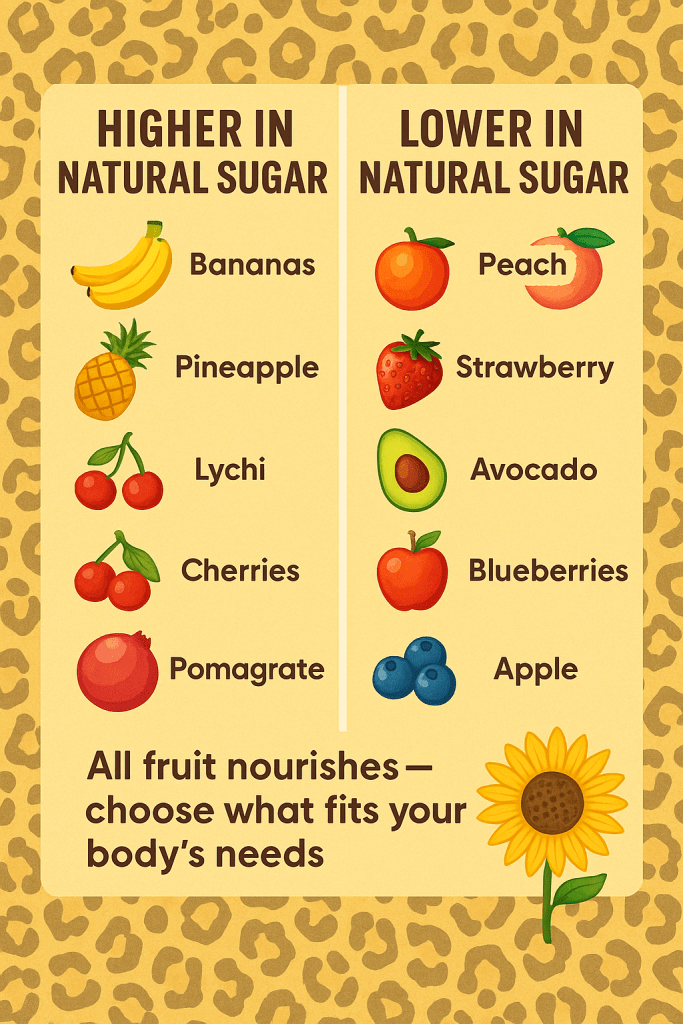
We’ve all seen those quick charts floating around — dividing fruits into “high sugar” and “low sugar.” At first glance, they can make you wonder: Should I avoid certain fruits altogether?
The truth is more nuanced. Let’s take a closer look.
🌟 What’s Helpful About These Charts
It’s true that fruits vary in natural sugar content.
Higher sugar fruits include bananas, grapes, pineapple, cherries, litchi, and pomegranates. Lower sugar fruits include berries, apples, peaches, oranges, and avocado.
For people monitoring sugar intake — like diabetics, or those following specific diets — knowing this difference can be useful. It helps guide choices without eliminating fruit completely.
⚖️ What’s Oversimplified
Here’s where the picture gets more balanced:
All fruit has natural sugar — but it also delivers fiber, vitamins, minerals, and antioxidants. A banana isn’t “bad,” and strawberries aren’t automatically “good.” Context matters. Eating a whole piece of fruit is very different from eating processed sugar. A banana fuels energy, fiber, and potassium — not the same as candy. Portion size makes a difference. A handful of grapes versus a big bowl changes the sugar load. Individual needs vary. An athlete may need the quick lift from pineapple, while someone with diabetes might prefer the steadiness of blueberries.
🌻 A Seasoned Soul Takeaway
Instead of labeling fruit as “good” or “bad,” think of it as choosing what serves your body’s needs in the moment.
Some days, you may need the fast fuel of a banana. Other days, the gentle sweetness of raspberries is the perfect fit. Both choices nourish you.
💛 Final Note
All fruit nourishes. The key is balance, intention, and listening to your body. Celebrate the variety, and choose with kindness toward yourself. 🌻

 Lady Flava News