

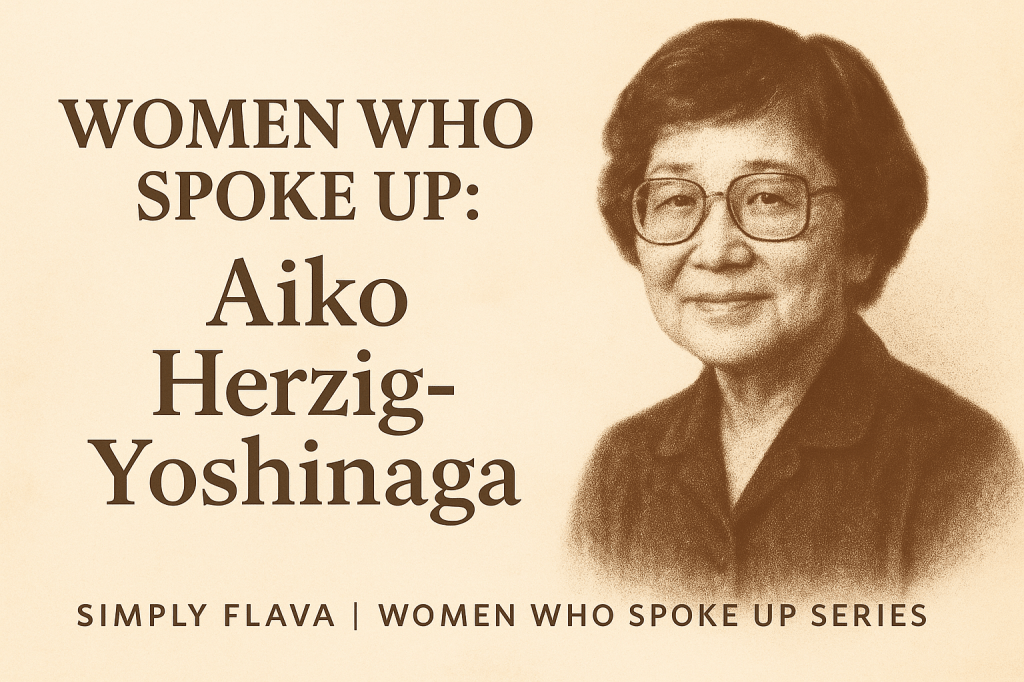
🌸 Women Who Spoke Up: Aiko Herzig-Yoshinaga
Simply Flava | Japanese Women Who Spoke Up Series
When I think of a woman who spoke up with quiet power and unshakeable purpose, Aiko Herzig-Yoshinaga stands in a lane all her own. She wasn’t loud. She wasn’t the face of the rallies. But she had something just as strong — clarity, truth, and determination.
And she used all of that to change American history.

Aiko was just 17 when her world shifted — her family, like thousands of Japanese Americans during World War II, was forced into incarceration camps. She carried the trauma of that experience quietly, the same way so many Japanese families did.
Years later, she discovered something that awakened a fire inside her:
✨ The government archives were full of contradictions — and she was going to uncover the truth.
Aiko taught herself how to navigate government paperwork like a seasoned detective.
Where others saw dry documents, she saw patterns.
Where others accepted official statements, she saw lies.
Where others felt powerless, she felt purpose.
Her relentless research uncovered internal government memos admitting that the incarceration was not based on military necessity — it was driven by racism, hysteria, and political convenience.
Her work became the backbone of the Redress Movement, leading to a formal U.S. apology and reparations for survivors.
Aiko didn’t just research history —
she rewrote it by uncovering the truth.
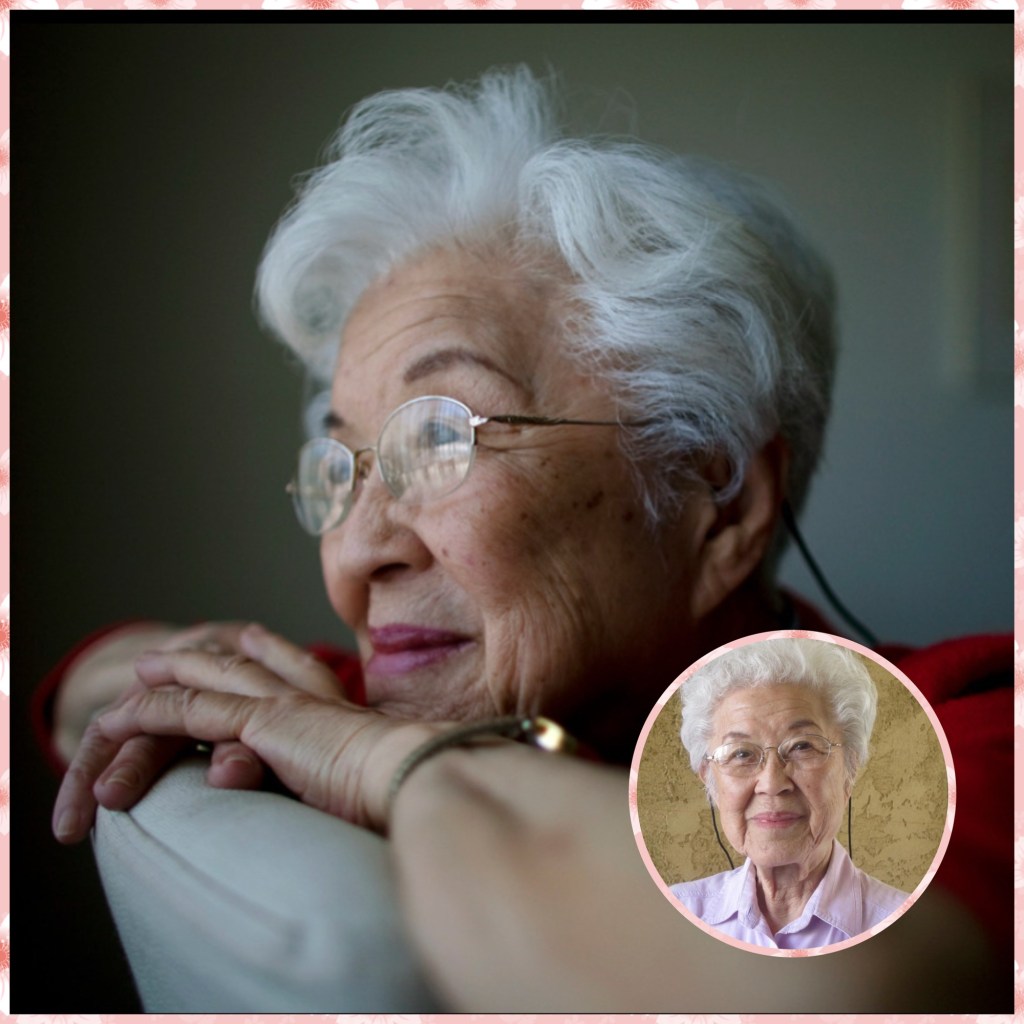
🌸 Why Aiko Matters to Me
Aiko reminds me of the women I grew up around —women with quiet strength, sharp minds, and the ability to carry pain without letting it steal their spirit.
She represents the unspoken resilience many Japanese families have lived with for generations.
She also reflects my own journey of rediscovering and reclaiming my Japanese heritage. Women like Aiko help me understand more deeply the experiences my father’s generation lived through — the silence, the humility, the layers of trauma that shaped our elders in ways they rarely talked about.
🌾 A Personal Connection to This History
My own family’s story sits close to this chapter of American history.
My father and grandfather narrowly avoided being forced into an internment camp only because a white family in San Jose signed for them to return to Colorado. But many of my extended relatives — the Takizawas, the Uedas, the Yabukis — did go into the camps. Their pain and their strength still ripple through the generations.
And later, when my father was called from Kansas City to serve at Seattle Japanese Baptist Church, he stepped into a congregation rebuilt after internment. That church had been closed during the war — its families uprooted, its community scattered.
When the camps closed, those families returned to Seattle carrying trauma, loss, and faith. They rebuilt their church, their homes, and their lives from the ground up.
I grew up surrounded by aunties, uncles, and elders who had lived through internment camps. They carried a quiet dignity, a gentleness, and a resilience that shaped how I see the world.
Their experiences became part of my upbringing — part of my spirit.
This history is not distant to me.
It’s in my roots, in the stories I was raised around, and in the community that shaped me.
It’s why honoring women like Aiko isn’t just historical —
it’s personal.
✍🏽 A Simply Flava Reflection
Aiko’s legacy isn’t loud — it’s lasting.
She showed us that:
You don’t need a microphone to make an impact. You don’t need a title to reveal truth. And sometimes, the most powerful revolution begins at a desk, with a woman who refuses to stop reading and searching.
Aiko Herzig-Yoshinaga changed history with a pen, a file folder, and the fire in her spirit.
That’s the kind of woman I honor.
That’s the kind of woman I come from.
And that’s the kind of woman I aspire to be.
— Lady Flava 🌻
 Lady Flava News