


**Thursday Health & Wellness
Understanding Vitamins & Minerals for 65+**
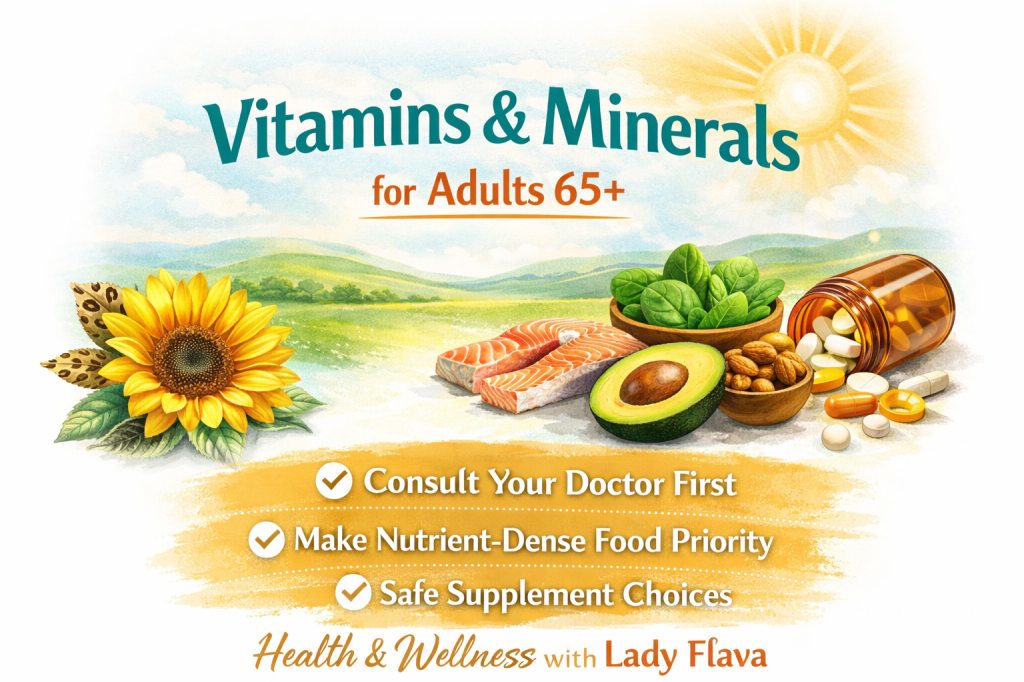
As we age, our bodies change—and so do our nutritional needs. What worked in our 40s and 50s may not serve us the same way in our mid-60s and beyond. Understanding vitamins and minerals becomes less about “taking more” and more about taking what’s appropriate—and safe.
Vitamins and minerals are essential micronutrients that help the body do what it needs to do every day: support bones, protect immunity, keep the heart steady, and help the brain stay sharp. Because the body doesn’t make most of these on its own, we rely on food first—and supplements only when needed.
Key Nutrients for Adults 65+
These are some of the most commonly recommended nutrients for older adults, often due to changes in absorption, diet, or sun exposure:
Vitamin D (600–4,000 IU daily) Supports bone strength, muscle function, and immune health. Many older adults need supplementation due to limited sun exposure.
Calcium (up to 2,000 mg daily) Essential for bone density and fracture prevention. Best absorbed when paired with Vitamin D.
Vitamin B12 (2.4 mcg daily) Important for nerve health and red blood cell production. Absorption often decreases with age.
Magnesium Supports muscle relaxation, nerve function, and heart rhythm. Found in nuts, leafy greens, and whole grains. Potassium Helps regulate blood pressure and fluid balance. Often low in modern diets.
Omega-3 Fatty Acids Supports heart and brain health, especially beneficial for inflammation.
Food First, Supplements Second
A nutrient-dense diet—rich in fruits, vegetables, lean proteins, dairy, and healthy fats—should always be the foundation. Supplements are meant to fill gaps, not replace meals.
Many people choose age-specific multivitamins (50+ or 65+ formulas), but targeted supplements like Vitamin D or B12 are often recommended only when a deficiency exists.
Important Safety Considerations
This is where things matter most.
Always consult your doctor or pharmacist before starting new supplements, especially if you take prescription medications.
Fat-soluble vitamins (A, D, E, K) stay in the body longer and can build up to unsafe levels.
Hydration matters—dehydration can affect how the body processes nutrients.
Vitamins & Minerals to Be Careful With Together
Some nutrients interact with each other:
Calcium & Iron: High doses of calcium can interfere with iron absorption.
Vitamin D & Calcium: These work well together—Vitamin D helps calcium absorb.
Zinc & Magnesium or Iron: Large zinc doses may block absorption of others.
Vitamin E & Vitamin K: High Vitamin E intake may interfere with blood clotting.
More is not always better.
Over-supplementation—especially with minerals—can strain kidneys and cause harm.
The Takeaway
Aging well isn’t about chasing every supplement on the shelf. It’s about understanding what your body needs now, eating well, staying hydrated, and partnering with your healthcare provider to make informed choices.
Your health deserves clarity, not confusion.
Closing Question:
Have you ever been unsure about which vitamins or supplements were right for you? How did you decide what to take—or not take?
 Lady Flava News