Real Talk Conversation
Does Everything We Feel Need an Audience?
Social media has given everybody a platform.
We can something.
We feel something.
We become angry, hurt, disappointed or offended—and within seconds, we can tell the world.
But should we?
We are encouraged to speak our truth, share our journey and live authentically.
I believe in all of that.
But I am beginning to question whether every truth needs an audience.
It is crazy what people are sharing publicly on social media.
Private disagreements.
Family business.
Relationship problems.
Workplace frustrations.
Screenshots of personal conversations.
Someone else’s trauma.
Rumors that have not been confirmed.
Videos of people during their most vulnerable or embarrassing moments.
And once something is posted, we lose control of where it goes.
People screenshot it.
They share it.
They add their own version of the story.
Strangers choose sides without knowing the whole people involved or what happened before the camera started recording.
By the time the original post is deleted, the damage may already be done.
People are ruining relationships.
People are losing jobs.
Professionals are being publicly chastised.
Arguments are becoming physical fights.
People are being bullied and harassed by strangers.
Online humiliation can add to an already fragile person’s emotional distress.
Some conflicts have escalated into threats, violence, suicide and murder.
Social media may not be the only reason these tragedies occur, but it can become fuel thrown onto an already dangerous fire.
We have to start asking ourselves:
What is the purpose of sharing this?
Am I looking for support?
Am I trying to educate someone?
Am I processing my feelings?
Am I trying to embarrass, punish or expose another person?
Am I speaking from wisdom—or reacting from an open wound?
And am I prepared for this post to be seen by my family, employer, coworkers, clients or the person I am writing about?
There are times when speaking publicly is necessary. Silence can protect harmful behavior, and one person’s truth may help someone else feel less alone.
But silence can also be wisdom.
Privacy is not always secrecy.
Taking time before speaking is not weakness.
And choosing not to post every emotion does not make us less authentic.
Sometimes we need to write the raw version privately.
Say everything.
Cry.
Fuss.
Be angry.
Let the truth come out without editing ourselves.
Then sit with it.
When the emotion settles, we can decide what belongs in public, what should be shared privately with one trusted person and what needs to remain ours.
We must also remember that our story may include other people.
We may have the right to speak about what happened to us, but that does not mean we should expose every detail of someone else’s life in the process.
Real Talk:
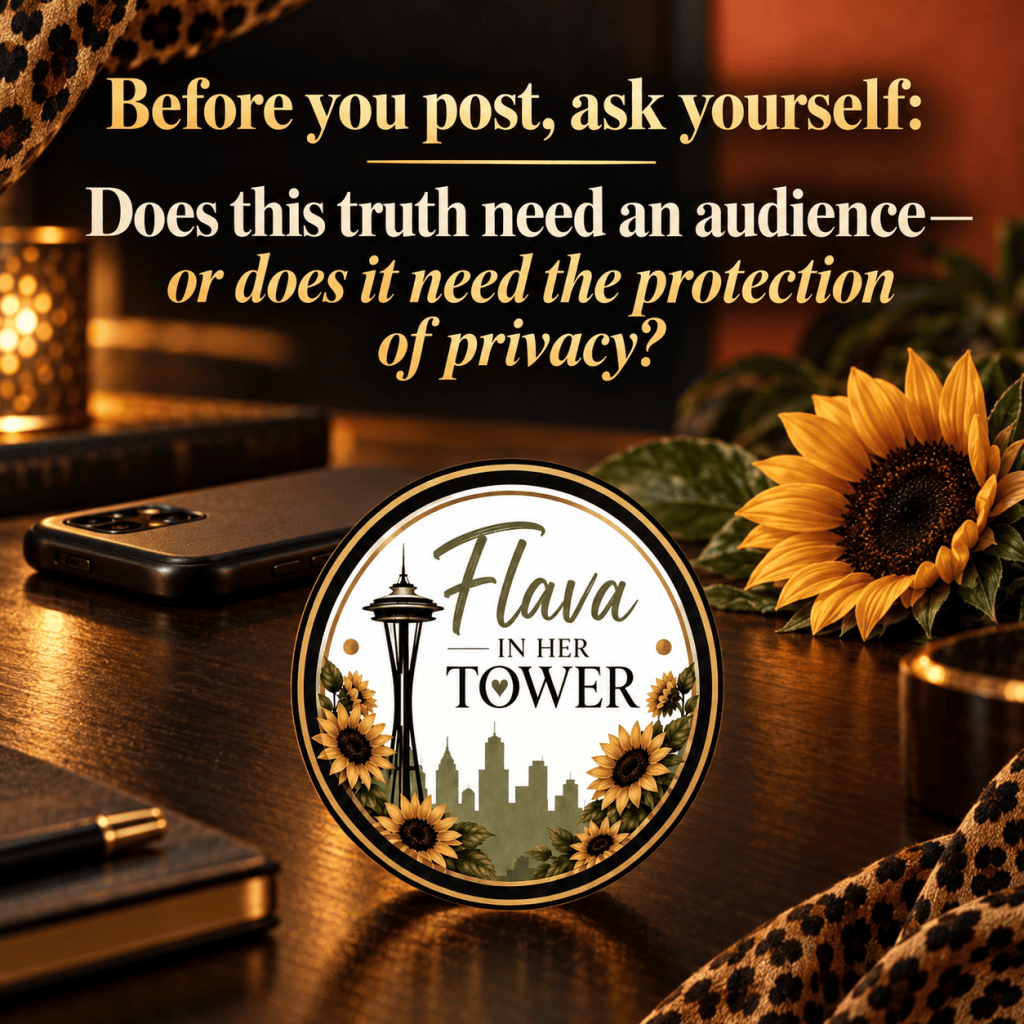
Does everything we feel need an audience?
Or have we become so accustomed to sharing that we have forgotten the power of privacy?
Before you press Post, ask yourself one more question:
Will sharing this bring understanding—or will it create damage that cannot be undone?
I would really like to hear your thoughts.
Do you believe every truth deserves an audience, or do some truths need the protection of privacy?
Real Talk with Lady Flava 🌻
From Flava in Her Tower 🌻