


“If I Get Dementia”
Repost From Facebook
This should be hung in every dementia care home and in hospitals where there are patients with dementia. They can’t come into your world, you have to go to theirs.
If I get dementia, I’d like my family to hang this wish list up on the wall where I live. I want them to remember these things.
And I would add one more:
Every time you enter the room announce yourself. “Hi Monica – it’s (name).”
NEVER ask- Do you know who I am??? That causes anxiety.
- If I get dementia, I want my friends and family to embrace my reality.
- If I think my spouse is still alive, or if I think we’re visiting my parents for dinner, let me believe those things. I’ll be much happier for it.
- If I get dementia, don’t argue with me about what is true for me versus what is true for you.
- If I get dementia, and I am not sure who you are, do not take it personally. My timeline is confusing to me.
- If I get dementia, and can no longer use utensils, do not start feeding me. Instead, switch me to a finger-food diet, and see if I can still feed myself.
- If I get dementia, and I am sad or anxious, hold my hand and listen. Do not tell me that my feelings are unfounded.
- If I get dementia, I don’t want to be treated like a child. Talk to me like the adult that I am.
- If I get dementia, I still want to enjoy the things that I’ve always enjoyed. Help me find a way to exercise, read, and visit with friends.
- If I get dementia, ask me to tell you a story from my past.
- If I get dementia, and I become agitated, take the time to figure out what is bothering me.
- If I get dementia, treat me the way that you would want to be treated.
- If I get dementia, make sure that there are plenty of snacks for me in the house. Even now if I don’t eat I get angry, and if I have dementia, I may have trouble explaining what I need.
- If I get dementia, don’t talk about me as if I’m not in the room.
- If I get dementia, don’t feel guilty if you cannot care for me 24 hours a day, 7 days a week. It’s not your fault, and you’ve done your best. Find someone who can help you, or choose a great new place for me to live.
- If I get dementia, and I live in a dementia care community, please visit me often.
- If I get dementia, don’t act frustrated if I mix up names, events, or places. Take a deep breath. It’s not my fault.
- If I get dementia, make sure I always have my favorite music playing within earshot.
- If I get dementia, and I like to pick up items and carry them around, help me return those items to their original place.
- If I get dementia, don’t exclude me from parties and family gatherings.
- If I get dementia, know that I still like receiving hugs or handshakes.
- If I get dementia, remember that I am still the person you know and love.”
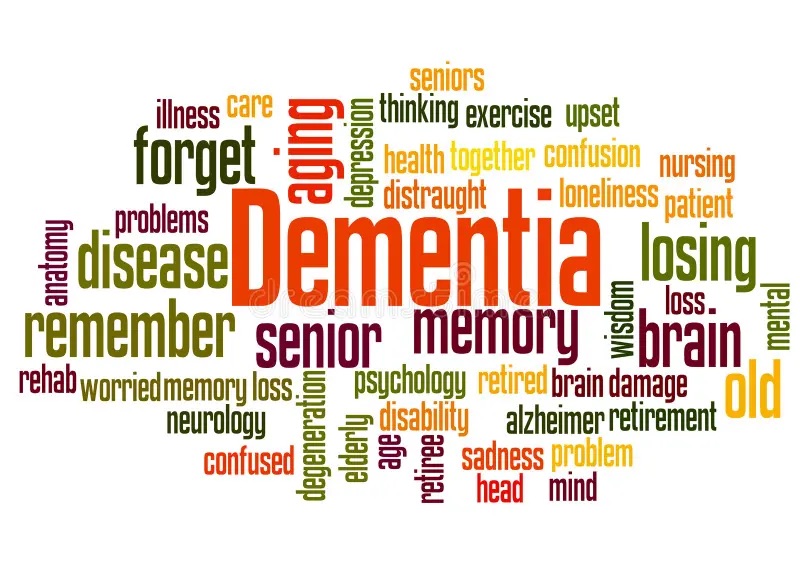
Title: “Facing Dementia and Alzheimer’s: A Personal Journey of Awareness, Care, and Compassion”
I’ve been thinking a lot about Dementia and Alzheimer’s lately. These diseases are often talked about in medical terms, but the real experience—the emotional, personal, human side—is something that many don’t fully understand until they live it.
My first encounter with Alzheimer’s was with my Auntie Michi in her late 80s. She didn’t recognize me anymore. Her mind would often take her back to her younger years in Japan. I remember her reflecting on the injustice she felt—that her brothers were allowed an education, while she and the other girls were made to work in the rice fields. She lived in that space of memory for several years until she passed away peacefully in her sleep in her 90s. I can’t say with certainty, but I believe my Uncle George and Uncle Sam may have also lived with undiagnosed Alzheimer’s.
I was blessed not to have this experience with my parents. My father had some memory issues as he aged, and by his 90s, his hearing and comprehension began to fade—but even then, he was alert, present, and communicative until close to his passing. Those are precious memories I hold dearly.
When I moved to Las Vegas in 2017, I started working as a Patient Safety Officer in a rehabilitation hospital. That role opened my eyes to what many families experience in silence and confusion. I worked 12-hour shifts with patients facing mental health challenges, including those at the onset of Dementia and Alzheimer’s. I learned about the unsettling reality of sundowning, where patients’ moods and behaviors shift dramatically as the sun goes down. Some needed constant supervision to keep them safe; others became verbally abusive or tried to get up when it wasn’t safe. You learn to go with the flow. You adapt.
Shortly after, I began working as a caregiver in eldercare. Some clients started off sweet and easygoing but would become difficult—sometimes even combative—within months. I tried to hold on, but for my own well-being, I had to step away from some of those roles. It wasn’t out of a lack of care—it was about recognizing my limits.
Eventually, I transitioned into a staffing coordinator role at the same hospital, where I had less direct patient contact. But the awareness and sensitivity to those struggling with cognitive decline never left me.
Now, back home in Seattle, I work in the Neuroscience Institute at Swedish Hospital, supporting patients with cerebrovascular and complex spine conditions. Many are elderly and in pain—pain that they often can’t articulate. Conversations are hard, and more often than not, a loved one or caregiver steps in to explain. I’ve become more intuitive now, able to recognize signs of cognitive change. And I owe that to the education, books, and real-world experience I gained in Las Vegas.
One thing I’ve come to realize: many families don’t recognize the early signs of Dementia or Alzheimer’s. They dismiss it as “just old age,” or they try to reason with a loved one who is no longer capable of processing the world in the same way. I want to encourage people to be open—to explore the possibility that a loved one might be entering a new phase of life where they are no longer in control of their mind or behavior. Don’t wait for a crisis. Start learning. Be proactive.
This disease doesn’t discriminate—it touches every culture, every community, every walk of life. It can be incredibly painful to watch someone you love change. But it can also be a time of unexpected beauty—moments of clarity, memories from decades ago suddenly resurfacing, and the deepening of compassion among those who care.
If you’re walking this path, I encourage you:
- Research and learn.
- Pray for patience.
- Know your limits.
- Create a plan of care with family or trusted helpers.
You don’t have to do it alone. Support is out there. And sometimes, the most powerful thing you can offer is your presence, even when the words no longer come.
LadyFlava of LadyFlavaNews
Sharing My Thoughts |Thinking Out Loud

 Lady Flava News