


Real Talk Thursday: The Necessity of a Digital Detox
We live in a world where being connected is the norm — and unplugging almost feels rebellious.
Technology is not the enemy. I use it every day. I research topics. I write four blogs a day. I check where my readers are coming from and how they found my blog. I engage thoughtfully and intentionally.
But here’s the real talk part:
constant connectivity comes at a cost.
I’ve watched several neurodivergent people I know go home after long days and spend hours — crazy amounts of hours — gaming. They come into work exhausted, overstimulated, and drained before the day even begins. For some, it’s a way to cope. For others, it’s a habit that quietly takes more than it gives.
I’m not judging — I’m observing.
I’ve lived on the other side of that screen too.
When technology becomes exhausting instead of empowering
There was a time when I lived on social media as Lady Flava. Posting constantly. Trying to grow followers. Trying to beat algorithms. Trying to “get the word out.”
And what I learned was this:
more effort went into staying visible online than into real-life interaction.
It was exhausting. Not because I didn’t love what I was creating — but because the pace never stopped. There was always another post, another metric, another comparison.
Eventually, I had to ask myself:
Is this feeding me… or draining me?
How technology has changed how we experience life
We text instead of talk.
We message instead of meet.
We assume tone instead of hearing voices.
And too often, messages are misinterpreted — not because people are careless, but because human connection doesn’t translate well through screens.
I’ve seen relationships strain, misunderstandings grow, and stress multiply — all because technology replaced conversation instead of supporting it.
What stepping back taught me
I didn’t quit technology.
I redefined my relationship with it.
Now:
I use technology intentionally, not compulsively I research topics instead of scrolling endlessly I post consistently, but I don’t chase numbers I value readers, not algorithms I notice where people come from, but I don’t measure my worth by views
Writing four blogs a day is a commitment I made to myself — not to the internet. That dedication feels grounded, not draining, because it’s aligned with purpose, not pressure.
Practical ways to unplug without disconnecting from life
A digital detox doesn’t mean disappearing. It means choosing.
Set tech-free time at home, even if it’s just an hour
Turn off notifications that don’t serve you
Replace late-night screen time with rest or quiet
Have real conversations — voice, face, presence
Notice how your body feels after too much screen time
Your nervous system will tell you the truth if you listen.
The bottom line
Technology should be a tool, not a tether.
Unplugging isn’t laziness.
It’s maintenance.
It’s how we recharge our mental health in a world that never stops talking.
Real life still happens off-screen.
And sometimes the most powerful connection you can make…is with yourself.
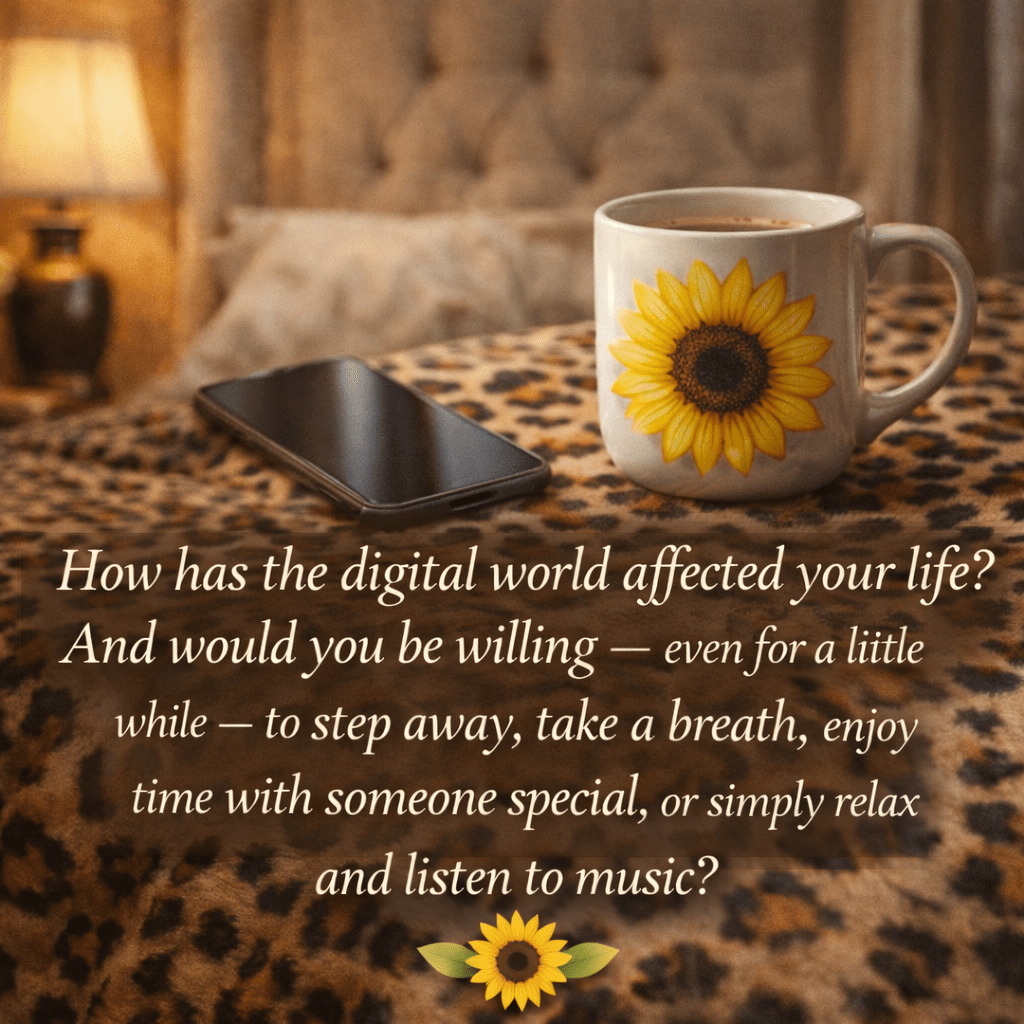
How has the digital world affected your life?
 Lady Flava News