Thursday Health & Wellness Special Alert
Wildfire Smoke and Seniors: What I Experienced in Real Time
This morning started out completely normal.
I was sitting in my usual spot by the windows watching my outdoor friends. The squirrels were running around, the birds were moving from tree to tree, and one crow sat in the cedar tree grooming himself for almost 40 minutes.
Then I noticed something strange.
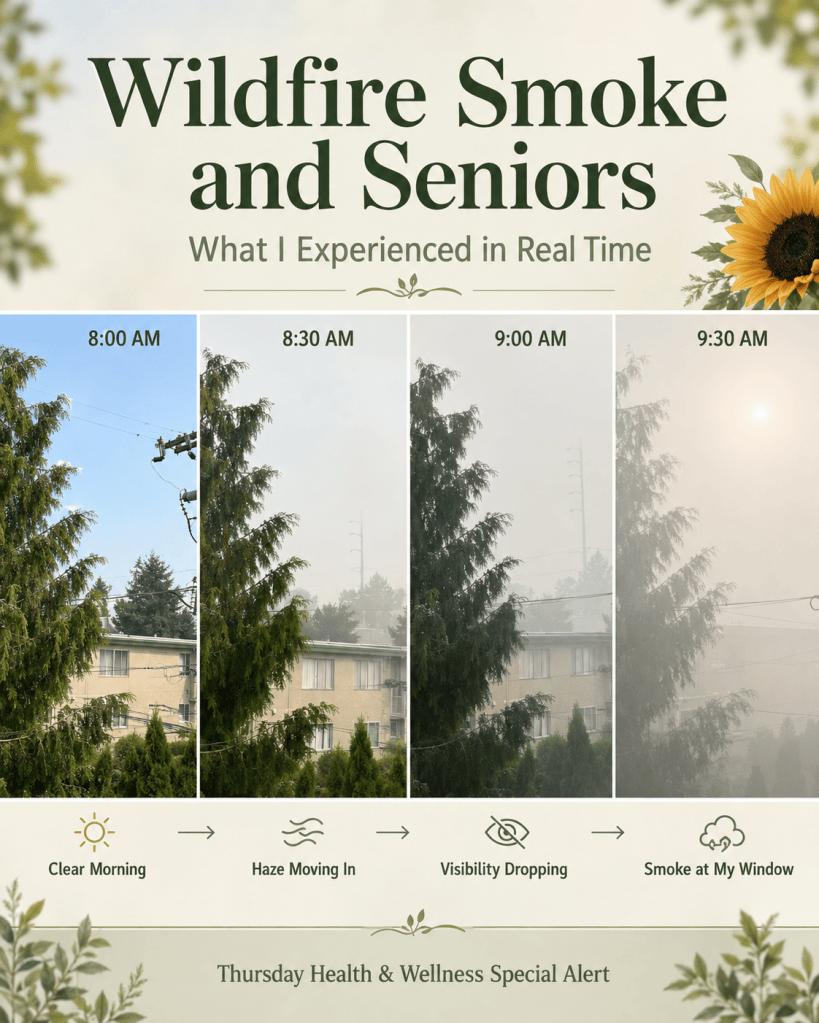
At first, I described it as a mist-like substance moving through the neighborhood.
I didn’t know what it was.
I watched it move north.
Then the trees a couple of blocks away started looking washed out.
The cellphone tower that I can normally see straight ahead became harder and harder to see.
Whatever this was became thicker.
Then I could see it on the west side of the cedar tree.
A short time later, it was directly in front of my windows.
The light outside became strangely bright. I found myself squinting even though I was sitting inside.
And then my body started reacting.
I was still working and answering phone calls when the coughing really kicked in.
At first, I tried to keep going.
But then my eyes began watering.
My nose started running.
I developed a headache.
The coughing got worse.
I started feeling sick.
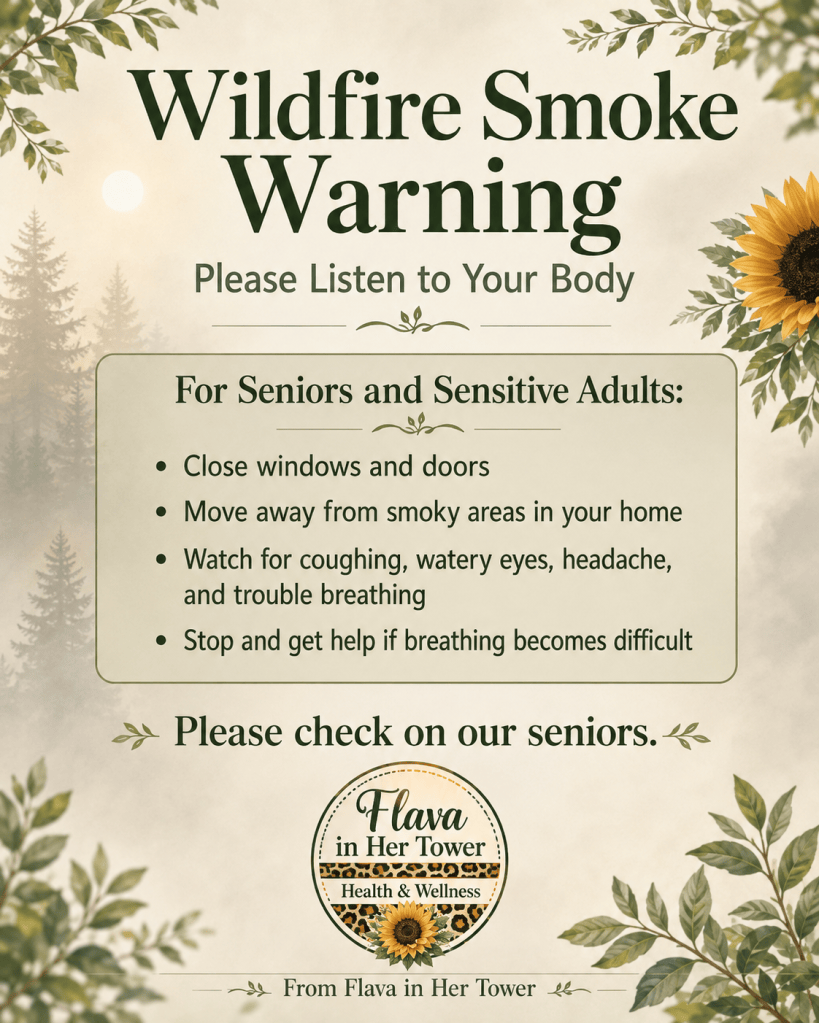
And finally, I noticed that I was having some difficulty breathing.
That is when this stopped being something interesting that I was watching outside my window.
It became a health issue.
I already had my windows closed, but I moved completely away from them and sat on my bed farther inside my home.
Within a short period of time, I started feeling better.
That got my attention.
Only after watching this happen in real time did I realize I was likely watching wildfire smoke move into my area.
According to the CDC, wildfire smoke can cause immediate symptoms including coughing, trouble breathing, wheezing, irritated or stinging eyes, runny nose, irritated sinuses, headaches, fatigue and chest discomfort. (cdc.gov)
And this is especially important for those of us who are getting older.
Older adults are considered more vulnerable to the health effects of smoke and fine-particle pollution. AirNow specifically identifies older adults as a group that should take additional precautions during smoke events. (airnow.gov)
What I Learned This Morning
Pay attention before you know exactly what you are looking at.
I didn’t begin this morning saying, “There is wildfire smoke outside.”
I simply noticed that something wasn’t right.
The air looked different.
Visibility was changing.
The brightness was strange.
Then my body started giving me information.
Sometimes we wait until we have a name for something before we react.
Today reminded me that we don’t always need the name first.
If something around you changes and your body starts reacting, pay attention.
If Wildfire Smoke Moves Into Your Area
Keep your windows and outside doors closed as much as possible.
Move away from areas of your home where the smoke seems strongest.
If possible, designate one room as your cleaner-air space. The EPA recommends keeping that room’s doors and windows closed and avoiding activities that create additional particles in the air. A portable air cleaner can provide additional protection when available. (epa.gov)
Don’t assume that because you are inside, you cannot be affected. Outdoor smoke can enter homes and affect indoor air quality too. (epa.gov)
Fans can make us feel cooler and circulate the air, but a regular fan by itself does not filter smoke particles out of the air.
And if you have a well-fitting N95 or similar respirator, keep it available if you absolutely must go outside during heavy smoke.
Seniors — Please Don’t Push Through Your Symptoms
This is the part I really want us to hear.
We have lived long enough to become very good at saying:
“I’m okay.”
“It’ll pass.”
“I can handle it.”
Sometimes we can.
Sometimes we need to move.
Sometimes we need to sit down.
Sometimes we need to stop working.
And sometimes we need medical help.
The CDC advises contacting a healthcare professional for trouble breathing, shortness of breath, a cough that won’t stop, or symptoms that don’t go away. Severe difficulty breathing or chest pain is an emergency. (cdc.gov)
Today, moving away from my windows helped me.
I am staying inside.
I am giving my body time to settle before returning to my workstation beside those windows.
And because the smoke is affecting my neighborhood, I also reached out to someone whose elderly father lives only a few minutes from me and suggested that she check on him.
That may be another important lesson.
Check On Our Seniors
If wildfire smoke is moving through your community, check on your parents.
Check on your grandparents.
Check on the older neighbor who lives alone.
Check on the person who may not be watching the news or checking an air-quality app.
They may simply be sitting in their home thinking:
“Why am I coughing?”
“Why is my nose running?”
“Why do my eyes burn?”
“Why does my head hurt?”
That was me this morning.
I watched something move across the sky without knowing what it was.
Then my body told me something was wrong.
Today was a reminder that Health & Wellness isn’t always about what we planned to discuss.
Sometimes Health & Wellness is happening right now.
Pay attention.
Protect your air.
Listen to your body.
And please check on our seniors.
From Flava in Her Tower 🌻
Lady Flava Wellness 🌻