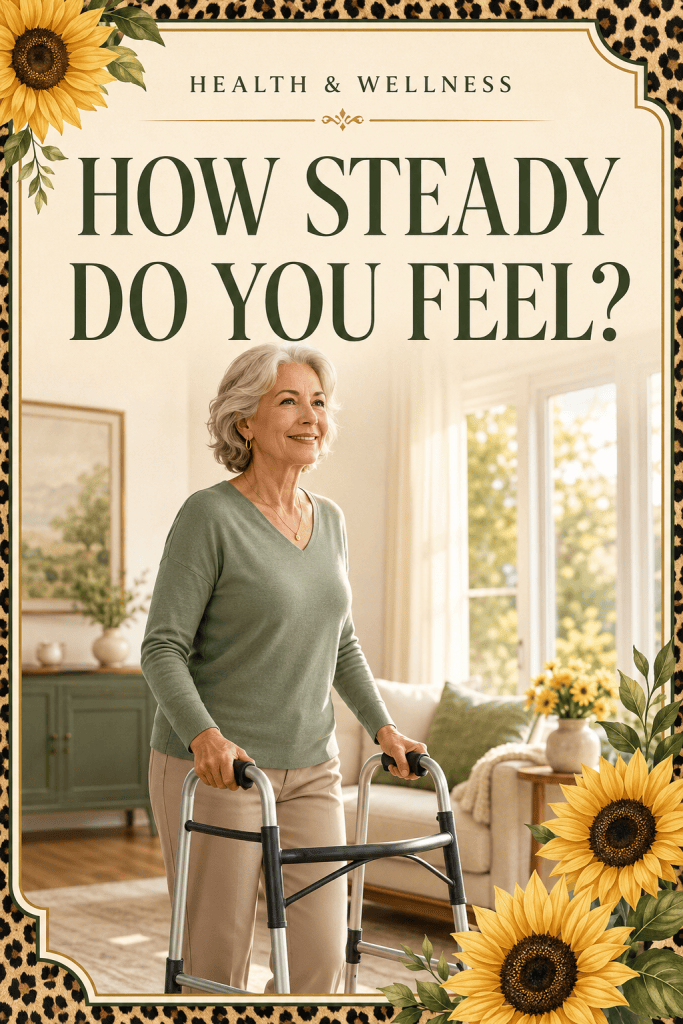
Health & Wellness | How Steady Do You Feel?
Dear Friends,
Balance is an important health and wellness topic to address as we age.
The other night, I decided to use my cane to walk to the bathroom instead of using my walker.
It was a huge mistake.
It did not take long for my body to tell me:
“Lady, we are not ready for this.” 😂
I wanted the cane to be enough. I wanted to see whether I was stronger and steadier than I had been feeling.
But the truth was clear. At this point in my mobility journey, my walker gives me the stability and support that my body needs.
That does not mean I will always need this level of support.
It simply means that I need it right now.
Balance Is More Than Standing on One Foot
When we think about balance, we may picture someone standing on one leg. But balance affects almost everything we do.
We need balance to:
- Get out of bed or stand up from a chair
- Walk through our home
- Turn around without becoming unsteady
- Step into the shower
- Bend over and reach for something
- Walk across uneven ground
- Climb stairs
- Move safely from one surface to another
Balance depends on several parts of our body working together, including our muscles, joints, vision, inner ear, feet, and brain.
Our balance may also be affected by lower-body weakness, certain medications, dizziness, vision changes, foot pain, improper footwear, and hazards around the home. Even some over-the-counter medications can affect how steady we feel. The CDC identifies these as common fall-risk factors for older adults.
Pay Attention to the Little Signs
Changes in balance do not always announce themselves in a dramatic way.
Sometimes we begin:
- Reaching for walls or furniture
- Holding onto countertops as we walk
- Feeling unsteady when we first stand
- Avoiding stairs
- Taking smaller or slower steps
- Losing confidence when walking outside
- Feeling dizzy when changing positions
- Moving less because we are afraid of falling
We may make these little adjustments without even realizing it.
There is no shame in admitting that our balance has changed. Recognizing a change gives us the opportunity to speak with our healthcare provider, identify what may be contributing to it, and learn what we can do safely.
Mobility Aids Are Not the Enemy
Many people resist using a cane, walker, grab bar, or other form of support because they believe it makes them look old, weak, or disabled.
But falling and becoming injured will not make us more independent.
Using the support we need can help us remain active and protect the independence we still have. The National Institute on Aging specifically recommends using a cane or walker when additional stability is needed. It also recommends strength and balance exercises, regular vision and hearing checks, medication reviews, safer home surroundings, and standing up slowly to reduce dizziness. These are practical fall-prevention steps, not signs of defeat.
My walker allows me to move around my home more safely.
Right now, it is doing exactly what it was designed to do.
I am not giving up by using it.
I am listening to my body while I continue working toward becoming stronger.
Our Homes Matter Too
Sometimes the problem is not only our body. Our surroundings can make staying steady more difficult.
Take a moment to notice:
- Loose rugs
- Cluttered walkways
- Electrical cords
- Poor lighting
- Slippery bathroom floors
- Uneven steps
- Missing handrails
- Items placed too high or too low
Grab bars, handrails, night-lights, clear pathways, and sturdy nonslip shoes may seem like small changes, but they can make moving through our homes safer. The CDC also recommends addressing these everyday home hazards.
Do Not Ignore a Change
If you suddenly feel unsteady, experience new dizziness, begin falling, or notice a significant change in the way you walk, please talk with your healthcare provider.
Ask questions.
Could a medication be affecting your balance?
Has your vision changed?
Are you experiencing muscle weakness?
Would physical therapy or another type of evaluation help?
Do not assume that becoming unsteady is simply something you must accept because you are getting older. Falls are not an inevitable part of aging, and many risks can be reduced. The CDC encourages older adults and their healthcare providers to assess individual fall risks and address the factors that can be changed.
My Journey Continues
Trying to use my cane gave me information that I needed.
My body is not ready for it yet.
I believe some of my current challenges come from pain, decreased activity, and becoming deconditioned. So, I am going to continue sitting upright more, moving my body safely, and working on rebuilding my strength and confidence.
But I will not rush the process just to prove something.
Sometimes listening to our body means accepting that the mobility aid we wish we did not need is still the one keeping us safe.
That is not weakness.
That is wisdom.
So, Dear Friends, take a moment today and ask yourself:
How steady do I feel?
Pay attention to the answer.
Your body may be telling you something important.
Disclaimer: This blog shares my personal experience and general health information. It is not a substitute for medical advice, diagnosis, or treatment. Please discuss new balance problems, dizziness, falls, or mobility changes with a qualified healthcare professional.
Lady Flava Wellness 🌻