

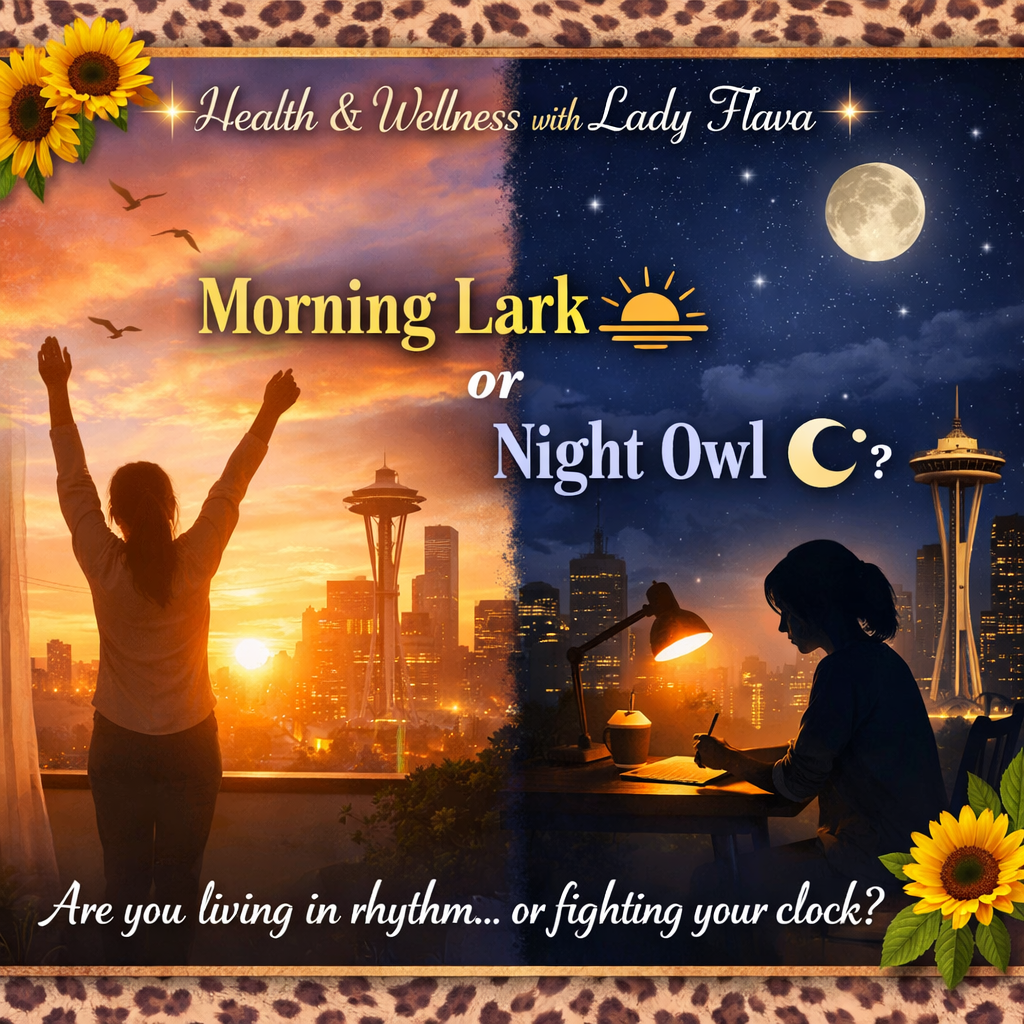
🌅 Morning Larks vs 🌙 Night Owls
Health & Wellness with Lady Flava
I woke up at 7am this morning.
Didn’t jump up.
Didn’t rush.
Just laid there.
We didn’t get home until 11pm last night — and that’s late for me. Normally I’m already asleep by then. I’m an early riser. Always have been.
I love watching the sky change. I love hearing the birds before the cars start moving. Seattle air in the morning feels clean… crisp… honest. Even if I’m just laying in bed on a weekend, I like knowing I’m up before the world fully wakes.
That’s not discipline.
That’s wiring.
But I know plenty of people who come alive at night. They’re sharp at 10pm. Creative at midnight. Focused when the rest of us are fading.
So let’s talk about it.
Are you a morning lark?
Or a night owl?
And more importantly… are you honoring your natural rhythm?
What the Research Says
Studies show that early risers tend to have:
Better insulin sensitivity
Lower risk of cardiovascular disease
Higher overall feelings of well-being
Biological rhythms that align with traditional work schedules
Night owls, on the other hand, often face:
Higher cardiovascular strain
Increased risk of depression
Greater rates of “social jetlag” — when your body clock doesn’t match society’s 9–5 expectations
Higher likelihood of unhealthy coping habits
Some research even suggests night owls may face a higher risk of early mortality.
But here’s the truth beneath the headlines:
It’s not that night owls are “bad.”
It’s that we live in a morning-focused world.
When your internal clock is constantly fighting your alarm clock, your body pays for it.
The real health marker?
Consistent, quality sleep.
Not hustle.
Not productivity.
Not how late you can stay up.
But how well you sleep.
My Night Shift Story
When I first moved to Vegas, I worked 6pm–6am.
I did what I had to do.
But I never truly adjusted. When I got off work in the morning, I couldn’t go straight to sleep. My body resisted it. The sun was up. The world was moving. Something inside me said, “This isn’t right.”
Some people thrive on nights.
I didn’t.
That matters.
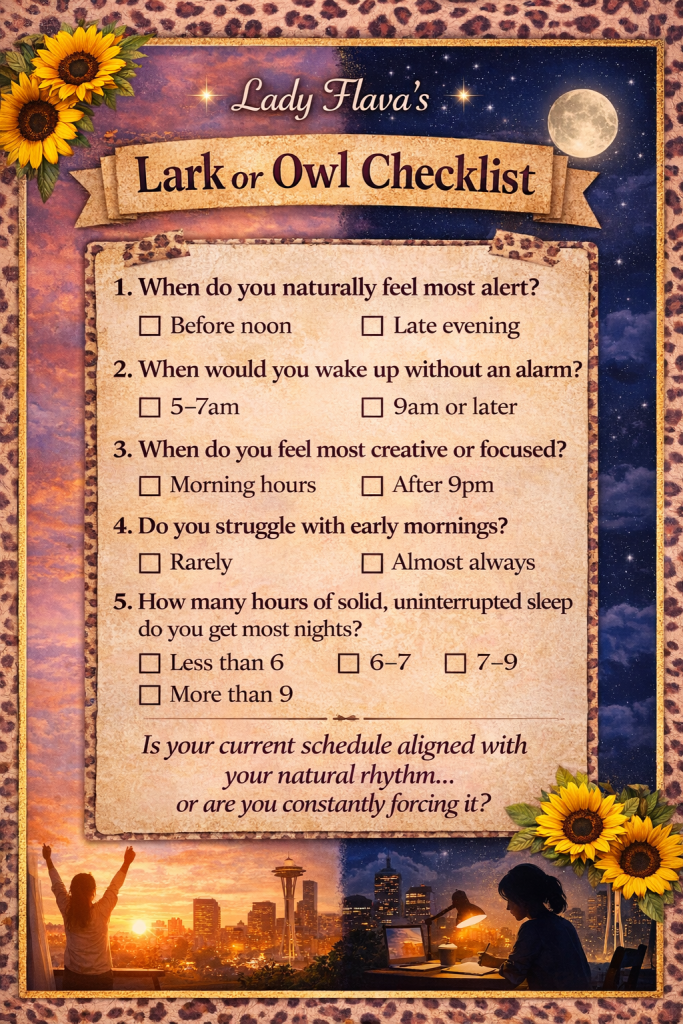
🌿 Lady Flava Checklist: Lark or Owl?
Be honest with yourself.
1. When do you naturally feel most alert?
☐ Before noon
☐ Late evening
2. When would you wake up without an alarm?
☐ 5–7am
☐ 9am or later
3. When do you feel most creative or focused?
☐ Morning hours
☐ After 9pm
4. Do you struggle with early mornings?
☐ Rarely
☐ Almost always
5. How many hours of solid, uninterrupted sleep do you get most nights?
☐ Less than 6
☐ 6–7
☐ 7–9
☐ More than 9
Now the real question:
Is your current schedule aligned with your natural rhythm —
or are you constantly forcing it?
Because forcing it long-term can show up as fatigue, mood shifts, weight changes, blood sugar issues, and cardiovascular strain.
Your body keeps score.
Here’s the Real Talk
Last night I stayed out late. I wouldn’t have missed it — watching Eddison laugh and light up with her friends was worth every minute.
But this morning?
I’m tired.
Not sick. Not flaring. Just tired.
That’s what happens when I stretch past my rhythm.
And there’s nothing wrong with that occasionally. Life is meant to be lived.
But if every day looks like that?
That’s when the body starts whispering… then speaking louder.
You don’t have to become a morning person.
You don’t have to romanticize staying up late.
You just need to know your rhythm — and respect it.
Because health isn’t just about what you eat.
It’s about when you sleep.
How deeply you rest.
And whether your life is in sync with your biology.
So I’ll ask you what I’m asking myself this morning:
Are you tired because you lived…
or tired because you’re misaligned?
There’s a difference.
And your body knows which one it is. 🌻
Lady Flava
 Lady Flava News