Tuesday Real Talk
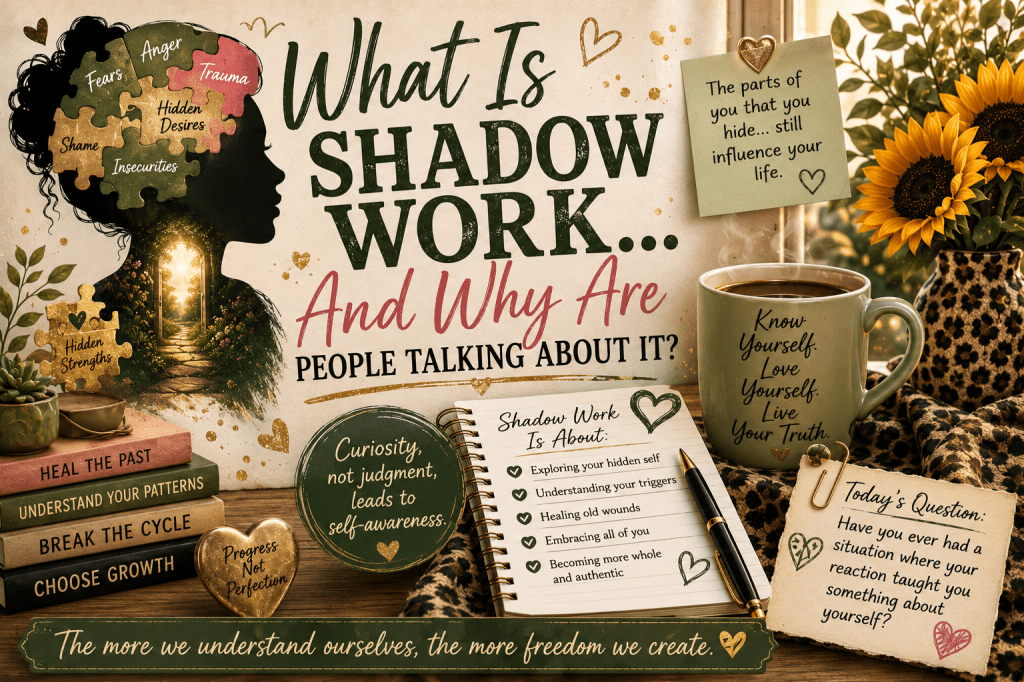
What Is Shadow Work… And Why Are People Talking About It?
I recently came across the term shadow work. I had heard it before but never really took the time to research what it meant.
The more I read about it, the more curious I became.
According to psychologist Carl Jung, our “shadow” is made up of the parts of ourselves that we hide, suppress, deny, or simply don’t fully understand. These can include fears, insecurities, anger, jealousy, shame, and emotional wounds. But surprisingly, our shadow can also include positive qualities that we learned to keep hidden.
For example, maybe you were told you were too sensitive, so you learned to hide your emotions.
Maybe you were told not to brag, so you learned to downplay your accomplishments.
Maybe you were always the caretaker and never learned how to ask for help.
Those hidden parts don’t disappear. They simply move into the background and quietly influence how we think, feel, and react.
One of the most interesting things I learned is that shadow work often begins with our triggers.
Have you ever met someone who irritated you immediately?
Have you ever found yourself having a stronger reaction to a situation than it seemed to deserve?
Sometimes the issue is truly the other person’s behavior.
But sometimes our reaction may be revealing something about ourselves.
Maybe someone else’s confidence makes us uncomfortable because we struggle with our own self-worth.
Maybe someone with strong boundaries seems rude because we’ve spent our lives saying yes to everyone.
Maybe someone’s criticism touches an old wound that never fully healed.
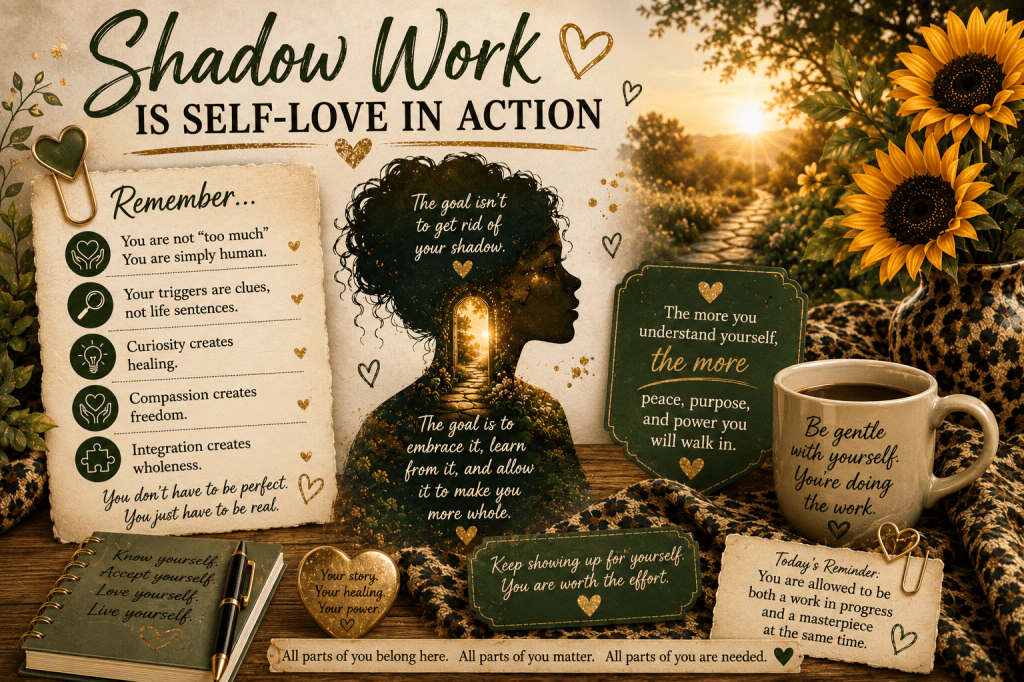
The goal of shadow work isn’t to judge ourselves.
The goal is to become more aware of ourselves.
Instead of asking:
“What’s wrong with me?”
We begin asking:
“Why did that affect me so strongly?”
Or:
“Where did this feeling come from?”
I think there is something powerful about becoming curious instead of critical.
The more we understand ourselves, the more compassion we often develop for both ourselves and others.
Now, I don’t believe every disagreement, annoyance, or difficult person is a hidden psychological lesson. Sometimes people are simply rude, selfish, or having a bad day.
But I do think there is value in occasionally pausing and asking ourselves what our reactions might be teaching us.

So today, I leave you with this question:
Have you ever had a situation where your reaction taught you something about yourself?
I’d love to hear your thoughts.
❣️
Lady Flava