


Saturday Health & Wellness
As We Age, Many of Us Do Not Move Very Much
Dear Friends,
I was sitting here this morning thinking about how much time I spend in my bedroom.
My work desk is next to the front window, where I can greet my bird friends. My little kitchen area is next to the south window. Everything I need is close, comfortable, and arranged to accommodate my body and mobility challenges.
But I have the entire top floor of this townhouse.
I have a TV room, a large bathroom, and a walk-in closet. Yet, because moving hurts, I spend much of my time in one room.
That is the honest truth.
When movement causes pain, staying still can feel like self-protection. We find the most comfortable position and remain there because we don’t want to trigger more pain.
But there is another truth I must face:
The less I move, the harder it can become to move.
I know I need movement to help keep my body functional and maintain the strength I still have. I am already experiencing some muscle deconditioning, and I don’t want to ignore what is happening.
Movement is important to our overall health. It supports our muscles, bones, balance, circulation, mood, and ability to continue doing everyday things for ourselves. The CDC reminds us that some physical activity is better than none—and when health conditions prevent us from meeting general recommendations, we can move according to our individual abilities. CDC guidance for older adults
I admire elders who are older than I am and still move around with ease.
But I also understand that every person’s body tells a different story.
Arthritis runs on both sides of my family. I live with chronic pain, hip arthritis, spinal challenges, and mobility limitations. Comparing my movement to someone else’s would not be fair or helpful.
This is not about competing with another person.
It is about asking myself:
What can I safely do today to keep my body moving?
Maybe it means sitting upright in my TV room instead of lying in bed.
Maybe it means walking around the room for a few minutes.
Maybe it means standing at the kitchen counter and gently lifting my heels.
Maybe it means rolling my ankles and wrists while watching television.
Maybe it means stretching my arms, moving my legs, or practicing standing from a sturdy chair—with support or using my hands if I need them.
Small amounts of movement throughout the day still count. We do not have to complete everything at one time, and we should work within our abilities—especially when living with chronic pain or other medical conditions. National Institute on Aging
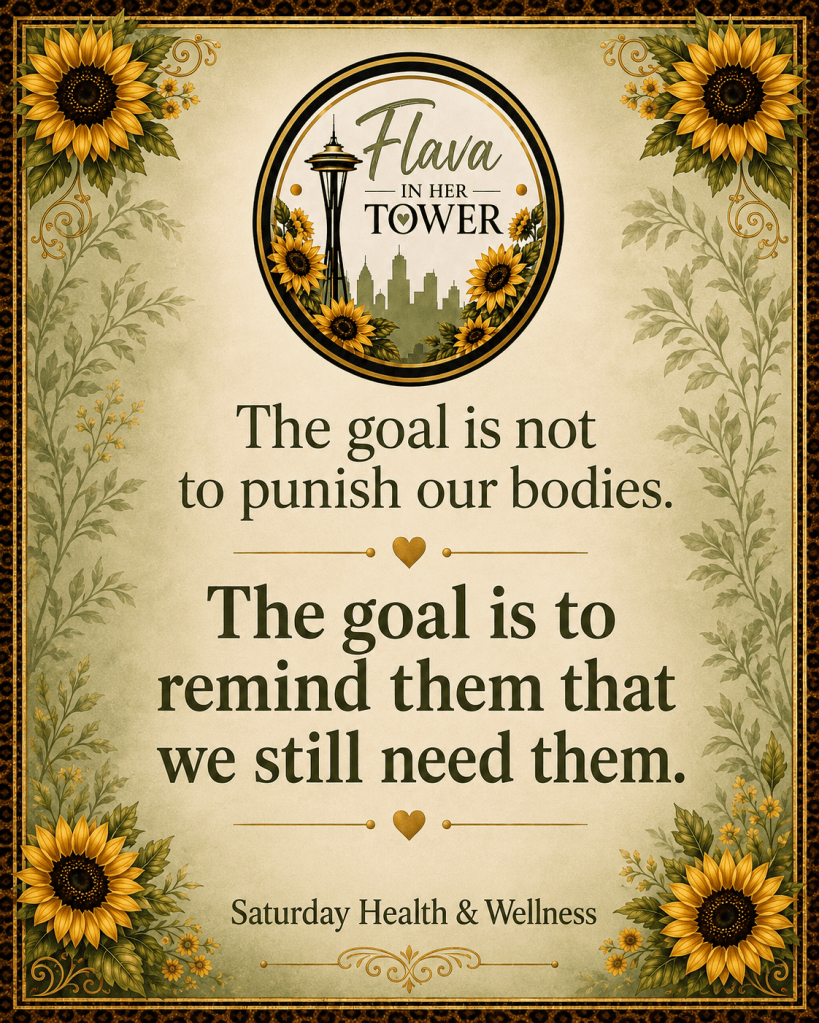
The goal is not to punish our bodies.
The goal is to remind them that we still need them.
I am going to begin by intentionally leaving my bedroom more often and sitting upright in my TV room. It may sound like a small change, but for me, it is a meaningful one.
So, where are my seasoned friends who don’t move very much throughout the day?
Are you staying still because you are tired?
Because moving hurts?
Because you have gotten comfortable in one particular room or chair?
Or because you simply fell into a routine without realizing how little you were moving?
There is no shame here. Let’s be honest about it and encourage one another to move a little more—safely, intentionally, and without comparison.
Let’s talk about it. 😁
Health Note: Talk with your healthcare provider or physical therapist about movement that is appropriate for your medical conditions, pain level, balance, and mobility.
Lady Flava Wellness 🌻
 Lady Flava News