

🩺 Health & Wellness
The 3 C’s of Health: Simple Principles That Show Up Everywhere
When life feels complicated, health doesn’t have to be.
Over the years, I’ve noticed something interesting — some of the most effective health principles come in simple threes.
Easy to remember.
Easy to apply.
And powerful when used consistently.
Here are three sets of “C’s” that show up across health, care, and everyday life.
🚑 1. First Aid: Check · Call · Care
This is one of the first things taught in emergency response — and for good reason.
Check Assess the scene for danger. Check the person for responsiveness and breathing. (You can’t help if you become part of the emergency.) Call Call emergency services if needed. Get help early — don’t wait until things worsen. Care Provide immediate care within your skill level — CPR, stopping bleeding, comfort measures — until help arrives.
Why it matters:
In emergencies, panic wastes time. Simple steps save lives.
🏥 2. Patient Experience & Provider Skills: Communication · Collaboration · Caring
Good healthcare isn’t just about treatment — it’s about how care is delivered.
Communication Open, honest sharing of information between patients and providers. Listening matters as much as speaking. Collaboration Healthcare works best when providers work together — nurses, doctors, staff, and patients as a team. Caring / Competence Empathy without skill isn’t enough — and skill without empathy isn’t healing. We need both.
Why it matters:
Patients don’t just remember what was done — they remember how they were treated.
🧠 3. Mental Health (CBT): Catch · Check · Change
Cognitive Behavioral Therapy gives us tools to work with our thoughts instead of being ruled by them.
Catch Notice negative or automatic thoughts as they arise. Check Question them. Are they facts… or assumptions? Are they helpful? Change Replace them with thoughts that are more balanced, realistic, and compassionate.
Why it matters:
We can’t always control what happens — but we can learn to reshape how we respond.
🌍 4. Public Health & Disease Prevention: Crowded · Close · Confined
Public health experts often focus on reducing exposure — especially during outbreaks.
Crowded places Avoid large gatherings when illness is spreading. Close contact Keep physical distance when possible. Confined spaces Be cautious in poorly ventilated areas.
Why it matters:
Prevention isn’t fear-based — it’s community care.
🌱 Final Thought
Health doesn’t live in just one lane.
It shows up in emergencies, in exam rooms, in our thoughts, and in how we protect each other.
Sometimes the best approach isn’t complicated — it’s clear.
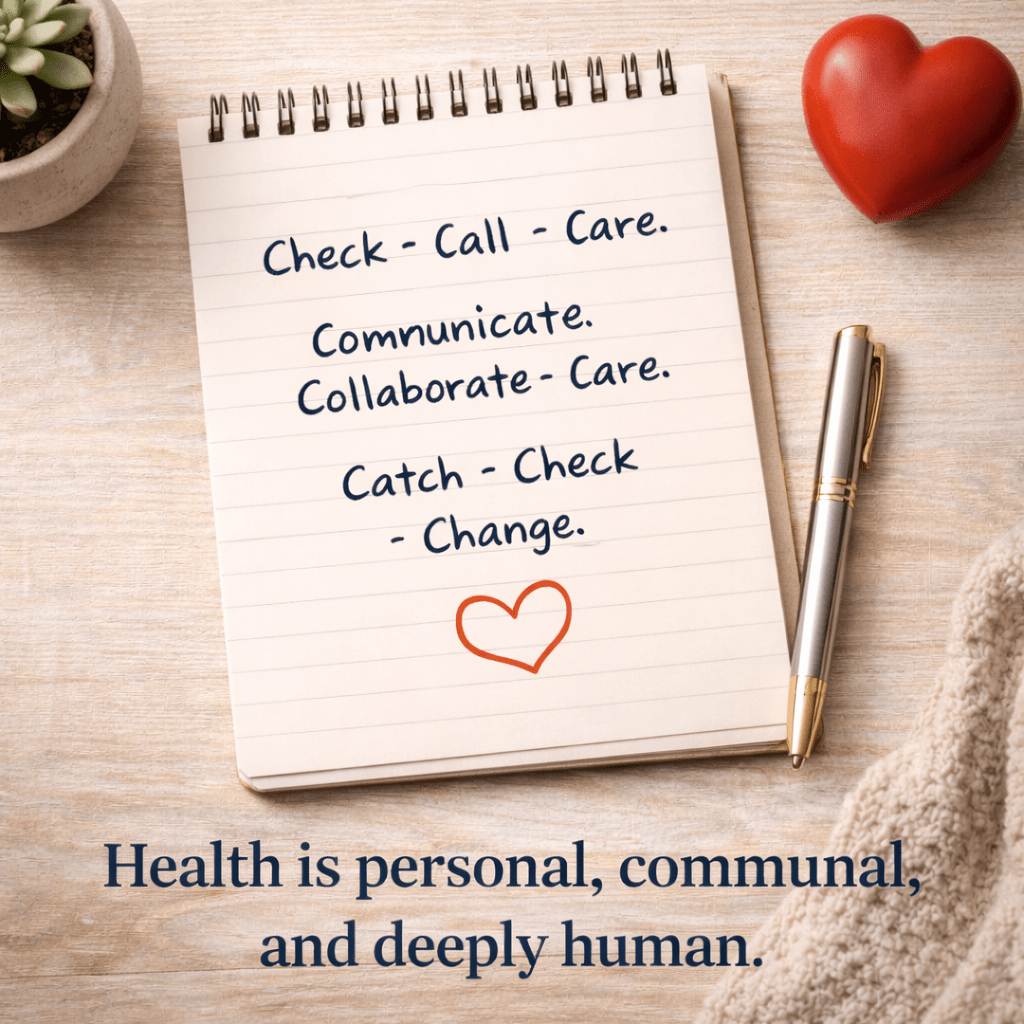
Check.
Call.
Care.
Communicate.
Collaborate.
Care.
Catch.
Check.
Change.
And remember: health is personal, communal, and deeply human.
 Lady Flava News