

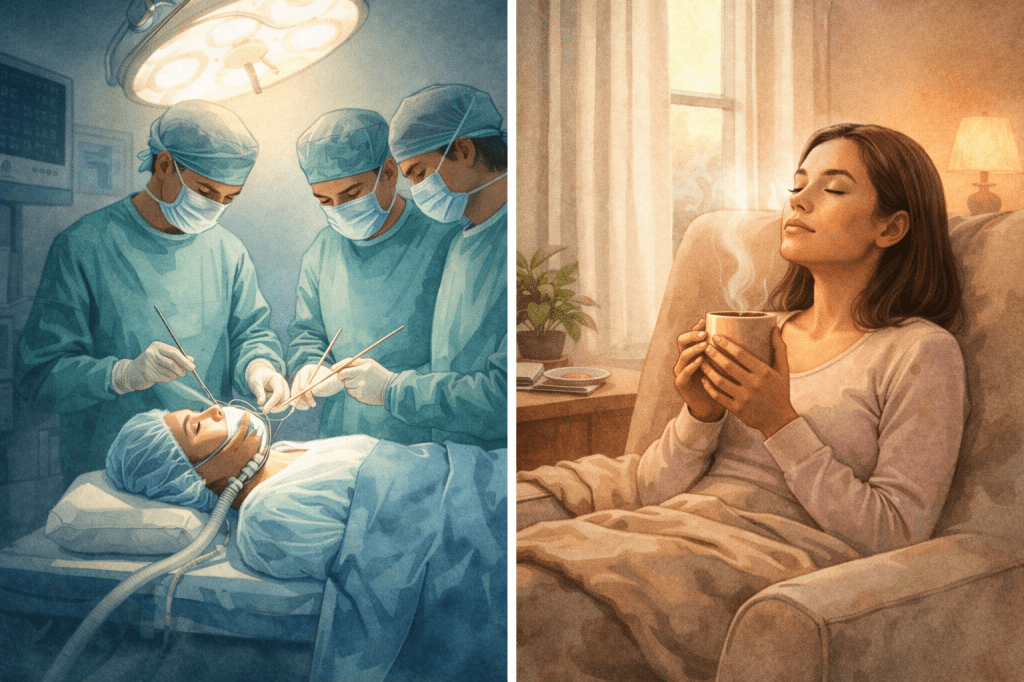
Real Talk | Health & Wellness
What Surgery Fixes — and What Healing Still Needs
I want to start by saying this clearly and respectfully:
I believe in our surgeons wholeheartedly, and I am proud to work alongside them.
I would never claim to be a medical expert. I’m not that. Surgery is precise, skilled, and often life-changing. It fixes what is physically broken, and I have deep respect for that.
What I am, though, is someone who understands pain.
Over this past year, I’ve learned more about my body than I ever expected to. I’ve known for a long time that I hold stress in my hips, and arthritis runs in my family. That part isn’t new. What is new is how clearly I now see the connection between stress, environment, fear, and how pain shows up — or eases.
For example, I never lived with arthritic pain when I lived in Las Vegas.
Dry heat was heaven on my body.
There’s a reason retirees flock to places like Las Vegas and Arizona in the winter. Warmth, low humidity, and less joint stiffness can make a real difference. That’s not theory — that’s lived experience.
Pain isn’t just structural.
It’s contextual.
I’ve also seen this on the phones.
I’ve spoken with patients who are overwhelmed, agitated, crying, and in severe pain. In those moments, nothing escalates pain faster than panic. So sometimes the most helpful thing isn’t scheduling or logistics — it’s saying:
“Just breathe with me for a moment.”
Slow breath.
Calm tone.
Gentle reassurance.
Because when the body feels threatened, pain intensifies.
When the nervous system settles, pain often softens — even if the underlying issue hasn’t changed.
That’s something we don’t always talk about enough.
Healing doesn’t end when surgery does.
There are simple, supportive practices that can help the body heal more fully:
Breathwork to calm the nervous system
Gentle movement instead of forcing recovery
Keeping the body warm, especially the core and joints
Hot water in the morning to loosen stiffness
Learning how to re-teach the brain that the body is safe and healing
None of this replaces surgery.
None of this challenges medical expertise.
It supports it.
I sometimes wish patients were given a short video, a book recommendation, or even a few sentences explaining how stress, fear, and safety affect recovery. Not as therapy — but as empowerment.
Because when patients understand what’s happening in their bodies, they suffer less.
This isn’t about doing more.
It’s about healing smarter.
I share this not as an expert, but as someone who has lived it — someone who has felt pain ease when warmth returned, when breathing slowed, when fear loosened its grip.
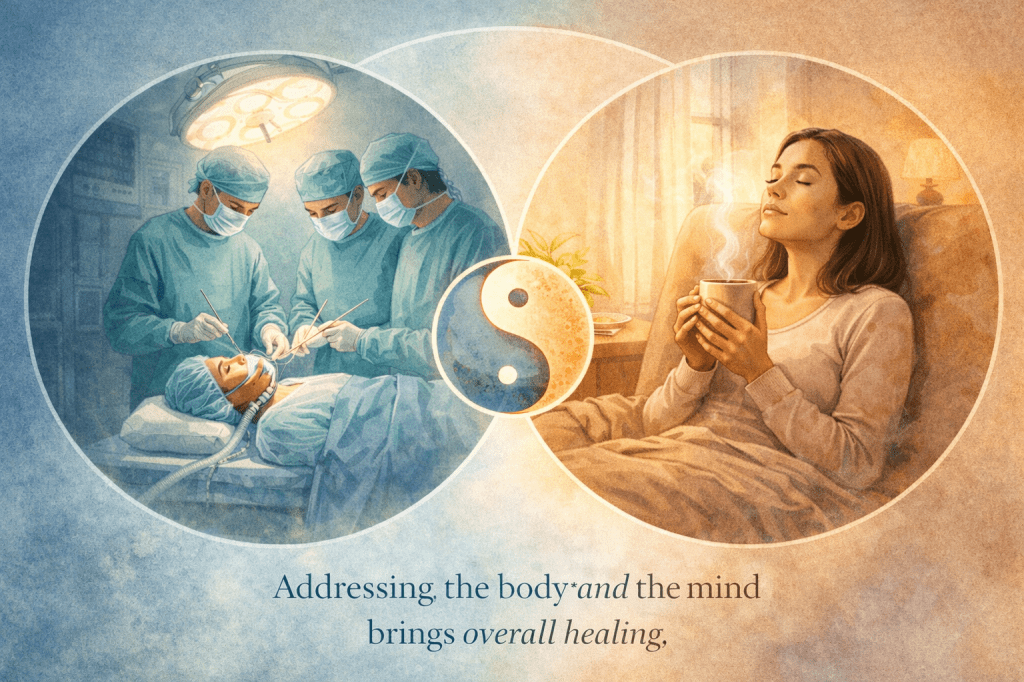
Real healing is physical and neurological.
Mechanical and human.
And when we honor both, recovery doesn’t just happen — it becomes gentler.
— Lady Flava
 Lady Flava News